
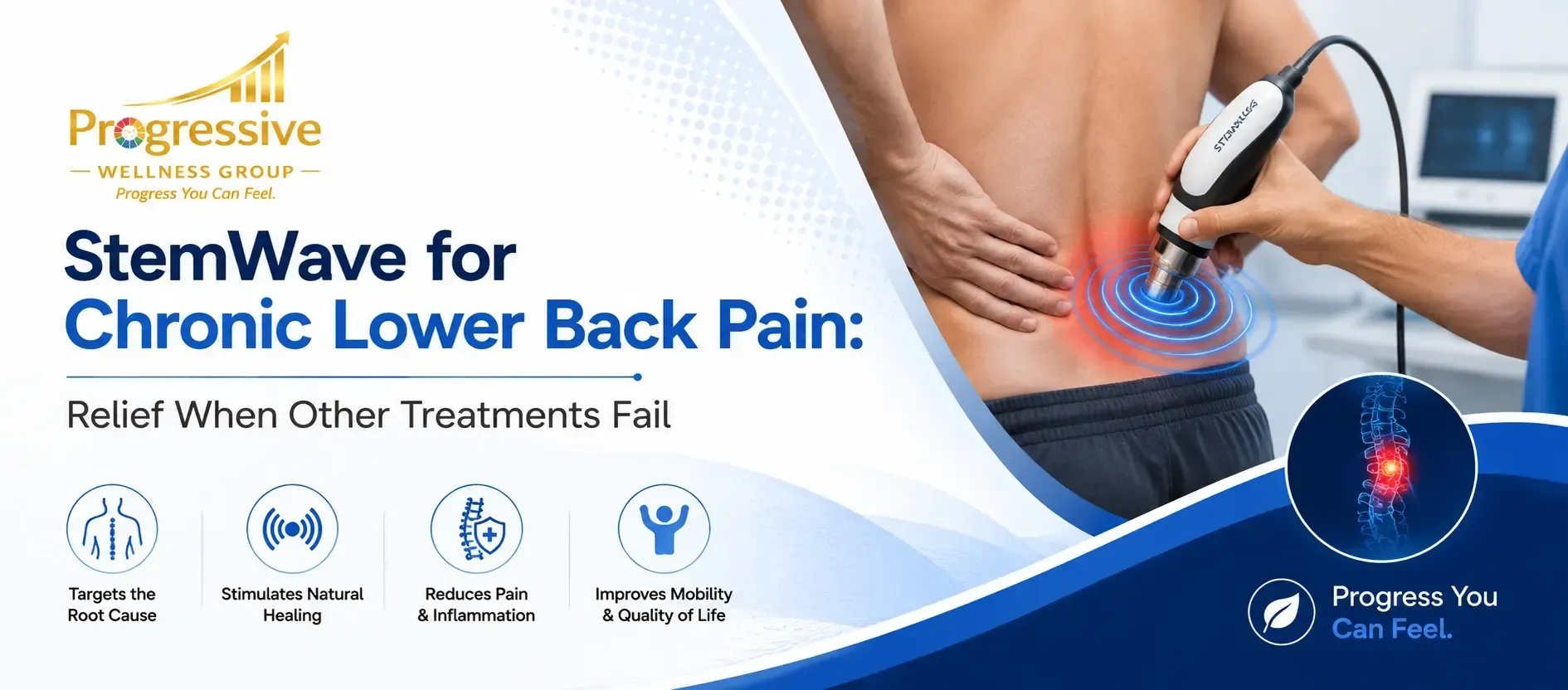
Chronic lower back pain can be incredibly frustrating, especially when you’ve tried everything from physical therapy and pain medications to injections and chiropractic care with little or no lasting relief.
Many people find themselves trapped in a cycle of temporary improvements followed by recurring pain, making it difficult to enjoy daily activities and maintain their quality of life. If this sounds familiar, you are not alone, and there may be another option worth exploring.
Unlike conventional treatments that often focus on symptom management, StemWave for chronic lower back pain takes a regenerative approach designed to support the body’s natural healing processes. By targeting damaged tissues and promoting cellular activity, Stemwave therapy offers a non-invasive solution for individuals seeking long-term relief after other treatments have failed.
Why Chronic Lower Back Pain Becomes Difficult to Treat
Chronic lower back pain is often more complex than a simple injury. Ongoing inflammation, tissue damage, and incomplete healing can keep pain lingering for months or even years. As these issues persist, the body’s natural recovery process becomes disrupted. Understanding this cycle helps explain why many traditional treatments provide only temporary relief.
Acute Pain vs. Chronic Pain: Understanding the Difference
| Acute Pain | Chronic Pain |
| Usually develops after a specific injury or strain | Persists for three months or longer |
| Follows a predictable healing timeline | The healing process becomes disrupted or incomplete |
| Inflammation gradually decreases as tissues recover | Inflammation may persist and continue damaging tissues |
| Pain improves as the injury heals | Pain can continue even after the original injury has resolved |
| Often responds well to rest and conservative treatments | Frequently requires a more comprehensive treatment approach |
While acute pain is a normal part of the body’s healing response, chronic pain is far more complex. When lower back pain persists for months, the body’s repair mechanisms may struggle to keep up with ongoing tissue damage and inflammation.
Over time, the nervous system can become more sensitive to pain signals, making recovery increasingly difficult.
When the Body Gets Stuck in a Cycle of Pain
Several interconnected factors can prevent chronic lower back pain from healing properly:
Persistent Inflammation
Ongoing inflammation in the muscles, ligaments, tendons, or spinal structures can interfere with normal tissue repair and keep the affected area in a constant state of irritation.
Reduced Blood Flow to Damaged Tissues
Certain structures in the lower back, including spinal discs, tendons, and ligaments, have a limited blood supply. This reduces the delivery of oxygen, nutrients, and healing factors needed for effective recovery.
Compensatory Movement Patterns
To avoid pain, the body naturally adjusts how it moves and distributes weight. Over time, these altered movement patterns can place additional stress on surrounding muscles and joints, creating new sources of discomfort or pain.
Repeated Microtrauma
Everyday activities such as sitting, bending, lifting, or standing for extended periods can repeatedly aggravate tissues that have not fully healed. This ongoing irritation can prevent the recovery process from reaching completion.
Understanding these underlying factors is critical because chronic lower back pain is rarely caused by a single issue. Effective treatment must address the root causes of pain and tissue dysfunction rather than simply masking symptoms, which is why many conventional approaches often provide only temporary relief.
Signs Your Current Treatment isn’t Addressing the Root Cause
Many people with chronic lower back pain try multiple treatments without achieving lasting relief. In many cases, the problem isn’t the lack of treatment but the fact that the underlying cause of the pain remains unaddressed.
- Temporary Relief: Your pain improves after treatment but returns within days or weeks, suggesting the symptoms are being managed rather than the source of the problem.
- Frequent Flare-Ups: Simple activities such as walking, sitting, bending, or getting out of bed continue to trigger pain, indicating that the affected tissues may not have fully healed.
- Pain Doesn’t Match Imaging: MRI or X-ray results may appear mild, yet you continue to experience significant discomfort because imaging doesn’t always reveal the full extent of tissue damage.
- Dependence on Medication: If you rely on pain medication to perform everyday activities, the underlying issue may still be present despite symptom control.
- Focus on Pain Management: When treatment is centered on reducing pain rather than promoting healing, long-term recovery can remain difficult to achieve.
These signs don’t mean your condition cannot improve. They may simply indicate that previous treatments have not addressed the underlying factors driving your chronic pain.
The Hidden Tissue Damage Behind Chronic Back Pain
Chronic lower back pain is not always caused by major structural abnormalities visible on an MRI or X-ray. While these imaging tools are valuable for identifying conditions such as herniated discs, fractures, and advanced degeneration, they often fail to reveal the subtle tissue damage that can contribute to ongoing pain and discomfort.
Some of the most commonly overlooked issues include:
Muscle Damage
Injured muscles don’t always heal completely. Residual weakness, tightness, or altered muscle fibers can continue to affect movement and contribute to chronic pain.
Ligament Dysfunction
Spinal ligaments that have been overstretched or injured may become weakened or scarred, reducing stability and placing additional stress on surrounding structures.
Fascial Restrictions
Restrictions within the fascia, the connective tissue surrounding muscles and organs, can limit mobility, create tension, and contribute to persistent discomfort.
Scar Tissue Formation
Scar tissue from previous injuries can restrict normal movement patterns, reduce flexibility, and place excess strain on nearby tissues.
Degenerated Soft Tissues
Tendons, ligaments, and other soft tissues surrounding the spine can gradually lose their ability to handle everyday mechanical stress, leading to ongoing irritation and pain.
Although these tissue-level problems may not appear clearly on diagnostic imaging, they can significantly impact function, mobility, and quality of life. Addressing chronic back pain often requires a treatment approach that supports healing at the cellular and tissue level rather than simply masking pain signals.
Types of Back Pain StemWave Can Help
StemWave is often used for chronic and stubborn back pain conditions that haven’t responded well to conventional treatments like medications, physiotherapy, or injections. It’s especially suited for soft tissue–related and chronic inflammatory pain patterns in the lower back.
Chronic Mechanical Lower Back Pain
This is long-standing pain caused by stress on muscles, ligaments, and supporting structures of the spine. It often worsens with activity and improves only temporarily with rest. StemWave helps by stimulating blood flow and encouraging tissue repair in these overworked areas.
Muscle Strain and Myofascial Pain
When back muscles remain tight, knotted, or inflamed for long periods, it can lead to persistent discomfort and stiffness. StemWave targets these damaged soft tissues to help reduce tension and support natural recovery.
Facet Joint–Related Pain
Facet joints connect the vertebrae and can become irritated due to wear and tear or poor posture. This type of pain is often localized and worsens with bending or twisting. StemWave may help by improving circulation and reducing chronic inflammation around the joint structures.
Sciatica (Radiating Nerve Pain)
Sciatica occurs when the sciatic nerve is irritated or compressed, causing pain that travels from the lower back into the legs. While StemWave does not directly “treat nerves,” it can help reduce surrounding tissue inflammation and muscle tightness that often contribute to nerve compression.
Degenerative Disc–Associated Pain
Age-related disc wear can lead to stiffness and chronic discomfort in the lower back. StemWave can support the surrounding tissues by improving microcirculation and promoting a healthier healing environment.
Post-Injury Chronic Back Pain
Some patients continue to experience pain long after an injury has healed on imaging. This is often due to scar tissue, poor tissue remodeling, or lingering inflammation. StemWave can help stimulate regenerative activity in these stubborn and non-healing areas.
Activity-Triggered Lower Back Pain
Pain that flares up during standing, lifting, or prolonged sitting is often linked to weak or fatigued supporting muscles and fascia. StemWave supports these tissues by encouraging better blood flow and reducing chronic irritation.
StemWave is best suited for persistent and soft tissue-driven back pain conditions, especially when the body has stopped responding to traditional recovery approaches.
How StemWave Approaches Chronic Back Pain Differently
For many people with chronic back pain, treatment focuses on controlling symptoms rather than addressing the underlying cause.
While medications, injections, and other conventional therapies can provide temporary relief, they often do little to support the healing of damaged tissues responsible for ongoing pain.
StemWave therapy takes a different approach. Instead of simply blocking pain signals, it’s designed to stimulate the body’s natural healing response, helping damaged tissues repair and recover over time.
By targeting the source of pain, the goal is not just pain relief but improved tissue health and long-term recovery.
Moving Beyond Symptom Management
Many traditional chronic lower back pain treatments work by reducing inflammation or interrupting pain signals sent to the brain. Although this can temporarily decrease discomfort, the underlying tissue damage often remains unchanged. As a result, symptoms frequently return once the effects of the treatment wear off.
StemWave therapy focuses on creating an environment that supports healing at the cellular level. Rather than masking pain, it encourages the body’s natural regenerative processes to address the tissue damage contributing to chronic discomfort.
How Focused Acoustic Waves Support Healing
StemWave utilizes advanced acoustic wave therapy to deliver focused mechanical energy deep into injured or damaged tissues. These acoustic waves trigger a series of biological responses that help promote repair and recovery.
- Reactivates Cellular Repair: The treatment stimulates cells within chronically injured tissues, encouraging them to resume normal repair and regeneration activities.
- Promotes Healing Signals: Focused acoustic waves help activate biological signaling pathways that support tissue repair and attract the body’s natural healing resources to the affected area.
- Improves Blood Flow: The therapy supports the formation of new blood vessels, helping increase circulation and deliver oxygen and nutrients to areas with limited blood supply.
- Encourages Tissue Remodeling: Treatment can help stimulate the breakdown of unhealthy scar tissue while supporting the development of stronger, healthier tissue structures.
Helping the Body Move Toward Recovery
By stimulating these natural healing responses, sound wave therapy helps create an environment where damaged tissues can begin progressing out of a chronic injury state.
For patients who have struggled with recurring pain despite multiple treatments, this regenerative approach offers a way to address the underlying tissue damage rather than simply managing symptoms.
Why StemWave for Chronic Lower Back Pain may Succeed Where Other Treatments have Failed
Many patients seeking StemWave for back pain have already explored multiple non-surgical treatments, including medications, physical therapy, injections, and other conservative therapies. While these approaches can provide temporary symptom relief, they may not always address the underlying tissue damage contributing to chronic pain.
What sets StemWave apart is its focus on supporting tissue repair and recovery rather than simply managing symptoms.
Targets the Source of Pain
Many traditional treatments focus on reducing pain signals. StemWave therapy is designed to support healing within damaged tissues, helping address the underlying factors contributing to chronic discomfort.
Reaches Deep Tissue Structures
Focused acoustic waves can penetrate deep into muscles, tendons, ligaments, and other soft tissues that may be difficult to effectively target with many non-invasive treatment options.
Supports Natural Healing
Rather than introducing drugs or suppressing the body’s responses, StemWave works by stimulating natural biological processes involved in tissue repair and regeneration.
Non-Invasive with No Recovery Time
Treatment does not require surgery, incisions, or lengthy recovery periods. Most patients can return to their normal daily activities immediately following a session.
Complements Other Therapies
StemWave can be incorporated into a broader recovery plan that may include rehabilitation exercises, mobility training, nutritional support, and other evidence-based treatment strategies.
For individuals who have struggled to find lasting relief, StemWave for back pain offers a different approach, one focused on improving tissue health and supporting the body’s natural ability to heal.
Real-World Back Pain Challenges StemWave Can Help Address
Chronic lower back pain affects everyone differently, but the impact often extends far beyond physical discomfort. It can interfere with mobility, work performance, exercise routines, sleep quality, and overall quality of life. Many patients who explore StemWave therapy are looking for solutions after months or years of ongoing symptoms.
Some of the most common challenges include:
Recurring Pain After Physical Therapy
Physical therapy can improve strength, flexibility, and movement patterns. However, if underlying tissue damage remains unresolved, pain may return once treatment is completed.
Lingering Effects of Old Injuries
Even injuries that occurred years ago can leave behind damaged or weakened tissues. Over time, these unresolved issues may continue to contribute to chronic pain and reduced function.
Daily Stiffness and Limited Mobility
Persistent stiffness can make simple activities more difficult and restrict normal spinal movement. This loss of mobility often affects both comfort and independence.
Difficulty Performing at Work
Chronic back pain can make it challenging to sit, stand, focus, or remain productive throughout the workday, impacting both performance and overall well-being.
Pain that Limits Exercise
When physical activity consistently triggers discomfort, many people reduce or avoid exercise altogether. Unfortunately, this can lead to further weakness, reduced mobility, and ongoing pain.
Sleep Disruption and Fatigue
Back pain that interferes with sleep can create a cycle of fatigue, slower recovery, increased stress, and heightened pain sensitivity, making symptoms even harder to manage.
By addressing underlying tissue damage rather than simply masking symptoms, StemWave therapy can help patients overcome many of the challenges that keep chronic back pain from improving.
What to Expect During StemWave Therapy
For many patients, one of the biggest questions is what the treatment process actually involves. StemWave therapy is designed to be a straightforward, non-invasive experience that fits easily into most daily routines while supporting the body’s natural healing response.
Initial Evaluation
Your journey begins with a comprehensive assessment of your symptoms, medical history, previous treatments, and functional limitations.
This evaluation helps providers identify the factors contributing to your pain and develop a personalized treatment plan tailored to your specific needs.
During Your Treatment Session
StemWave treatments are performed in-office using a handheld device that delivers focused acoustic waves to targeted areas.
Most patients describe the sensation as a series of deep pulses or pressure waves. The procedure is non-invasive and does not require needles, incisions, or anesthesia.
After the Session
Most patients can return to their normal activities immediately following treatment. Some may experience mild soreness or tenderness in the treated area for a short period as the body responds to the therapeutic stimulation.
The Healing Process
Unlike treatments that simply mask symptoms, StemWave is designed to stimulate biological processes involved in tissue repair. Because healing occurs gradually, patients receiving StemWave for chronic lower back pain often notice improvements developing over time as the body responds to treatment and damaged tissues begin to recover.
Why Multiple Sessions are Recommended
Chronic tissue damage typically develops over months or years and cannot always be resolved in a single treatment. A series of sessions is often recommended to continuously support the healing process and help patients achieve the best possible outcome.
Your provider will determine the appropriate treatment schedule based on your condition, symptoms, and response to care, ensuring the plan aligns with your recovery goals.
Measuring Success Beyond Pain Scores
Reducing pain is an important goal, but it’s only one part of the recovery process. When evaluating the effectiveness of StemWave for back pain, it’s equally important to look at improvements in function, mobility, and overall quality of life. Lasting recovery is often reflected in what patients can do, not just how much pain they feel.
- Improved Mobility: Greater flexibility and range of motion can make everyday activities easier and help restore normal movement patterns that may have been limited by chronic pain.
- Increased Activity Tolerance: As discomfort decreases and tissue function improves, many patients find it easier to walk, exercise, work, and participate in activities they previously avoided.
- Better Sleep Quality: Less pain-related discomfort at night can lead to deeper, more restorative sleep, which plays a vital role in the body’s healing and recovery processes.
- Reduced Dependence on Medication: As symptoms improve, some patients may be able to rely less on pain medications to manage daily activities and maintain their quality of life.
- Greater Confidence in Movement: One of the most meaningful signs of progress is the ability to move without constantly worrying about triggering pain. Increased confidence can help patients return to normal routines and enjoy a more active lifestyle.
By tracking these functional improvements alongside pain levels, patients and providers can gain a more complete picture of recovery and long-term treatment success.
Is StemWave Therapy the Next Step in Your Back Pain Recovery?
If chronic lower back pain continues to interfere with your daily life despite trying multiple treatment options, it may be time to consider a different approach. Rather than focusing solely on symptom management, StemWave therapy is designed to support the body’s natural healing processes and address underlying tissue dysfunction.
Who Can Benefit from StemWave Therapy?
StemWave may be a suitable option for individuals who:
- Have been living with chronic lower back pain for months or years.
- Continue to experience symptoms despite physical therapy, medications, or injections.
- Patients who want to explore non-invasive alternatives before considering surgery.
- Struggle with recurring pain that affects work, exercise, sleep, or everyday activities.
- If you are looking for a treatment approach that supports healing rather than temporary symptom relief.
When Should You Consider an Evaluation?
You may want to schedule a StemWave consultation if conventional treatments have failed to provide lasting results or if chronic pain is preventing you from living the active lifestyle you want.
An evaluation allows providers to determine whether StemWave for chronic lower back pain is appropriate for your condition and discuss realistic treatment expectations based on your individual needs.
Find Lasting Relief with StemWave at Progressive Wellness Group
Chronic lower back pain often persists because the underlying tissue damage and healing deficits are never fully addressed.
While many treatments focus on managing symptoms, StemWave for chronic lower back pain is designed to support the body’s natural healing response, helping patients pursue lasting improvements in pain, mobility, and function.
Being a leading StemWave therapy provider in Madison Heights, Progressive Wellness Group combines advanced StemWave therapy with personalized care to help patients who have not found relief through conventional treatments. Our focus is on identifying the root cause of pain and creating treatment plans that support long-term recovery.
If chronic back pain is limiting your daily activities, disrupting your sleep, or preventing you from doing the things you enjoy, schedule a consultation with our team. We’ll help you determine whether StemWave for back pain is the right next step in your recovery journey.