Arthritis can turn everyday movements climbing stairs, standing up, walking, or reaching overhead into uncomfortable tasks. Pain, stiffness, and swelling can affect how you move, with the knees, hips, and shoulders often experiencing significant stress.
When medications provide limited relief or surgery feels premature, many people explore non-surgical options. This is one reason interest in laser therapy for arthritis pain continues to grow among those seeking a conservative approach to managing joint discomfort.
In this guide, we’ll explain how laser therapy works, its potential benefits, and how it may support people with knee, hip, or shoulder arthritis. We’ll also cover what treatment involves and who may be a suitable candidate.
What is Laser Therapy for Arthritis Pain?
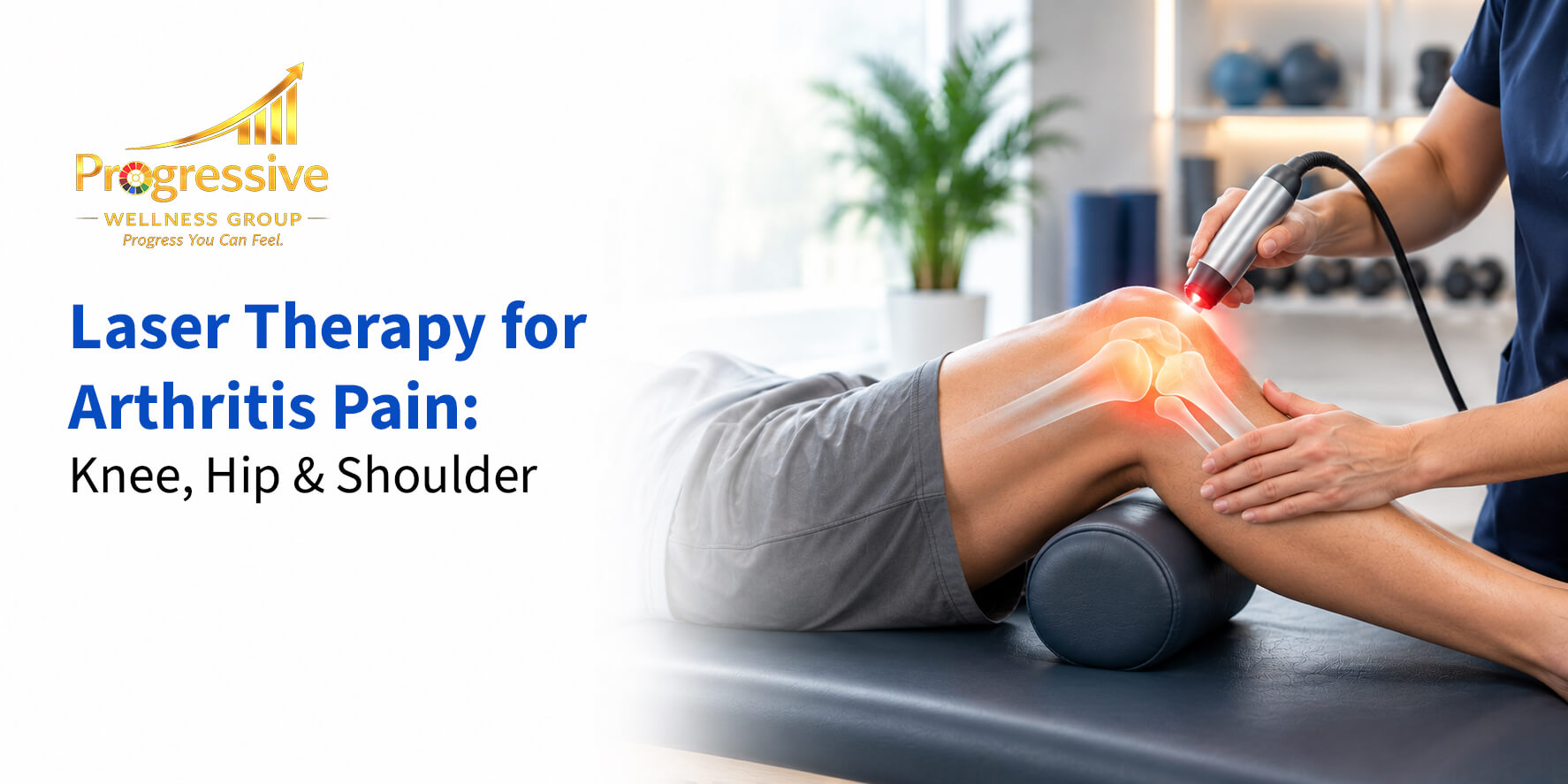
Therapeutic laser therapy uses focused wavelengths of light to deliver energy into tissues beneath the skin. Unlike surgical lasers that cut or alter tissue, therapeutic lasers are non-invasive and work without removing or resurfacing tissue. Instead, they are used to support cellular activity and the body’s natural healing processes.
The term “laser” can sometimes make people think of surgery, but therapeutic laser therapy for arthritis pain is very different. Treatment is applied directly over the affected area without incisions or injections.
Progressive Wellness Group uses two general approaches:
- Low-Level Laser Therapy (LLLT): Also known as cold laser therapy, this approach uses lower-powered light and generates little heat.
- High-Level Laser Therapy (HILT): Uses higher-powered energy designed to reach deeper tissues.
The appropriate approach depends on the treatment area, symptoms, and individual needs.
How Laser Therapy Works at the Cellular Level
Laser therapy delivers specific wavelengths of light that can be absorbed by cells in the treated area. This process, known as photobiomodulation, is thought to influence several cellular processes:
- Supports Cellular Energy: Light energy may interact with the mitochondria, which plays a key role in producing energy within cells.
- Promotes Local Circulation: Treatment may support blood flow in the targeted area, helping tissues receive oxygen and nutrients.
- Supports the Body’s Inflammatory Response: Laser therapy may influence cellular activity involved in inflammation and tissue irritation.
- May Help Manage Discomfort: These cellular effects may contribute to reduced pain and improved comfort for some people.
While cold laser therapy can help manage symptoms, individual results vary. It’s considered a supportive treatment rather than a cure for the underlying joint changes caused by arthritis.
Does Laser Therapy Work for Arthritis Pain?
One of the most common questions people have is whether laser therapy for arthritis pain can actually make a difference. The answer depends on the individual.
Laser therapy may be used as part of a broader approach to managing arthritis-related discomfort, stiffness, and mobility challenges, but it doesn’t reverse the underlying joint degeneration.
Arthritis can involve changes to cartilage and other joint structures that laser therapy cannot repair. However, treatment may help manage symptoms while rehabilitation addresses strength, flexibility, movement, and function.
Factors That Shape Your Treatment Response
Results can vary based on factors such as:
- Type and severity of arthritis
- The joint being treated
- How long symptoms have been present
- Overall health and activity level
- Treatment approach and frequency
- Rehabilitation and movement needs
For example,
Someone with early-stage knee arthritis may respond differently than someone with advanced hip arthritis. A personalized evaluation can help determine whether laser therapy fits your specific needs and goals.
Potential Benefits of Laser Therapy for Arthritis
Laser therapy may offer several potential benefits when incorporated into a broader arthritis care plan. While results vary, treatment may help manage symptoms and support participation in daily activities and rehabilitation.
Arthritis Pain Management
Laser therapy may be incorporated into a broader pain-management plan to help address ongoing joint discomfort. Many providers use cold laser therapy as a gentle and non-invasive option that most patients can tolerate easily.
Reduced Joint Inflammation
Arthritis-related inflammation can contribute to pain, swelling, and stiffness. Laser therapy may support the body’s inflammatory response at the cellular level, potentially helping reduce localized irritation and improve day-to-day comfort.
Improved Mobility and Daily Activity
When discomfort is better managed, movement can become easier. This can help patients participate more comfortably in physical therapy, exercise, and everyday activities without making pain management the sole focus.
Non-Invasive Treatment Option
Laser therapy doesn’t require incisions or needles and typically doesn’t involve an extended recovery period. This makes laser therapy for arthritis pain an option for people seeking a conservative approach before considering more invasive treatments.
Physical Therapy Integration
Laser therapy and physical therapy can address different aspects of arthritis management. While laser therapy can help manage discomfort, physical therapy can focus on strength, flexibility, movement, and functional limitations.
Laser Therapy for Knee Arthritis
Knee arthritis can affect more than just the joint itself. As pain and stiffness increase, activities that once felt routine may become more difficult. Laser therapy may be considered as part of a conservative approach to managing these symptoms.
How Knee Arthritis Can Affect Everyday Movement
The knee is a major weight-bearing joint, so arthritis can make routine activities increasingly uncomfortable. Pain, stiffness, and reduced mobility may affect:
- Walking, particularly on uneven surfaces
- Climbing or descending stairs
- Getting up from a chair
- Exercise and physical activity
- Recreational activities, such as golf or gardening
For some people, these limitations lead them to consider a knee pain alternative treatment when conventional approaches have not provided sufficient relief.
What to Expect from Laser Therapy for Knee Pain
Laser therapy may be incorporated into a broader care plan to manage knee discomfort and inflammation. By addressing symptoms, it can make everyday movement and therapeutic exercise more comfortable.
It’s important to understand that laser therapy doesn’t reverse cartilage loss or rebuild damaged joint structures. Its role is focused on symptom management rather than correcting the underlying changes associated with knee arthritis.
When Knee Arthritis Needs a Broader Treatment Approach
Conservative care doesn’t produce the same results for everyone. A professional evaluation may be appropriate if you experience:
- Persistent or worsening pain
- Reduced mobility or range of motion
- Knee weakness or instability
- Symptoms that interfere with daily activities
An evaluation can help determine whether laser therapy for arthritis pain is appropriate for your symptoms or whether another treatment approach may be more suitable.
Laser Therapy for Hip Arthritis
Hip arthritis can affect more than comfort; it can change how you walk, sit, stand, and participate in activities you enjoy. Because the hip is a weight-bearing joint, persistent symptoms can gradually limit mobility and independence.
Hip Arthritis: Common Daily Challenges
As stiffness and discomfort progress, you may notice:
- Pain while walking or staying active
- Discomfort after prolonged standing
- Reduced hip flexibility and range of motion
- Difficulty getting in and out of chairs or vehicles
- Less participation in recreational activities
Where Laser Therapy Fits into Hip Arthritis Care
Targeted laser therapy may be incorporated into a conservative treatment plan to manage hip discomfort. However, because the hip is a deep and heavily loaded joint, symptom management is generally only one part of the care.
A comprehensive approach may also include:
- Mobility exercises to maintain functional movement
- Strengthening exercises to improve support around the hip
- Activity modification to manage aggravating movements
- Rehabilitation strategies tailored to individual goals
Treatment priorities can vary. Earlier-stage arthritis may focus on maintaining mobility and activity, while more advanced symptoms may require greater emphasis on managing discomfort before progressing with exercise.
Is Laser Therapy Appropriate for Your Hip Pain?
Hip pain doesn’t always come from arthritis. Soft-tissue conditions, lower-back problems, and other joint issues can produce similar symptoms. Identifying the underlying cause is therefore an important first step.
A professional evaluation can review your symptoms, medical history, mobility, and physical findings to determine whether laser therapy fits your needs or whether another approach may be more appropriate.
Laser Therapy for Shoulder Arthritis
Shoulder arthritis can affect one of the body’s most mobile joints, making everyday movements unexpectedly difficult. Pain and stiffness may interfere with everything from getting dressed to reaching for an item on a shelf.
Everyday Activities Shoulder Arthritis Can Disrupt
As symptoms progress, you may experience difficulty with:
- Reaching overhead or behind your back
- Getting dressed or putting on a jacket
- Lifting and carrying objects
- Sleeping comfortably
- Participating in recreational activities
Where Laser Therapy Fits into Shoulder Arthritis Care
Laser therapy may be incorporated into a broader approach to managing shoulder arthritis symptoms. Addressing discomfort can make it easier to work on the mobility and strength needed for everyday function.
Cold laser therapy may be used over the affected shoulder as part of this approach. However, treatment doesn’t restore damaged cartilage or correct the underlying structural changes associated with arthritis.
Laser Therapy and Movement: Why Both Matter
Resting a painful shoulder may provide temporary relief, but prolonged inactivity can contribute to greater stiffness and reduced strength. A comprehensive care plan may instead combine symptom management with appropriately guided movement.
Depending on the individual, treatment may include:
- Range-of-motion exercises
- Strengthening activities
- Activity modification
- Progressive rehabilitation
The right approach depends on the cause and severity of the shoulder problem. A professional evaluation can help determine which combination of treatments is appropriate.
What Happens During a Laser Therapy Session?
Are you wondering what a typical session looks like? While your treatment plan will depend on your symptoms and goals, laser therapy generally follows three straightforward steps.
Evaluate Your Condition
Your provider begins by reviewing your symptoms, medical history, and affected area. They may also assess your movement and function to determine whether laser therapy for arthritis pain is appropriate and develop a plan around your individual needs.
Treat the Targeted Area
The laser device is applied directly over the affected area, such as the knee, hip, or shoulder.
Depending on the treatment area and tissue depth, your provider may use:
- Cold Laser Therapy (LLLT): Uses lower-powered light and produces little heat.
- HILT: Uses higher-powered laser energy for deeper tissues.
The treatment is non-invasive and generally well tolerated. You may feel mild warmth, and there are no incisions or needles involved.
Monitor Your Progress
Laser therapy may be combined with physical therapy, mobility exercises, or strengthening work. Your provider can monitor how you respond and adjust your care plan based on your symptoms, function, and treatment goals.
Laser Therapy vs. Other Arthritis Pain Treatments
There are several ways to manage arthritis symptoms, and laser therapy is just one option. If you’re considering knee pain as an alternative treatment, comparing the different approaches can help you understand where each may fit into a broader care plan.
| Treatment Approach | Primary Goal | Role in Arthritis Care |
| Laser Therapy | Manage pain and support tissue response | Non-invasive symptom-management option |
| Physical Therapy | Improve strength, mobility, and function | Movement-based rehabilitation |
| Medication | Manage pain and inflammation | Symptom management |
| Injections | Target pain and inflammation | May provide temporary symptom relief |
| Surgery | Address significant structural problems | Considered when clinically appropriate |
These approaches aren’t necessarily alternatives to one another. Depending on the individual, a treatment plan may combine symptom management with rehabilitation and other interventions.
For example,
Laser therapy for arthritis pain may be incorporated to manage discomfort while physical therapy focuses on mobility, strength, and function. Medication or injections may also be considered when appropriate.
Who May Be a Candidate for Laser Therapy for Arthritis Pain?
Laser therapy may be an option for adults managing arthritis-related joint discomfort, particularly when symptoms begin affecting movement or everyday activities. A professional evaluation is important to determine whether it fits your condition and treatment goals.
Potential candidates may include people who:
- Experience arthritis-related joint pain or stiffness
- Are looking for a knee pain alternative treatment or another non-invasive option
- Have symptoms that interfere with movement or daily activities
- Want to complement an existing physical therapy or rehabilitation program
- Have been professionally evaluated and determined to be appropriate for treatment
When Another Approach May Be Needed First
Laser therapy may not be appropriate when the cause of joint pain hasn’t been identified. New or unexplained symptoms should be evaluated before beginning treatment to rule out injuries and other underlying conditions.
Additional evaluation may also be necessary when there is:
- Significant joint degeneration
- Major structural damage
- Severe or rapidly worsening symptoms
- Unexplained swelling or loss of function
In these situations, addressing the underlying problem should take priority. Your provider can determine whether laser therapy is appropriate or whether another treatment approach is better suited to your condition.
How to Get Better Results From an Arthritis Treatment Plan
A treatment plan is most effective when different parts of care work together. Whether you’re receiving laser therapy, exploring a knee pain alternative treatment, or following another conservative approach, your daily habits and consistency can influence how well you manage symptoms and maintain function.
Stay Consistent with Your Exercise Plan
Follow the strengthening, mobility, and functional exercises recommended by your provider. These exercises can help address movement limitations and build the strength needed for everyday activities.
Consistency also allows your rehabilitation plan to progress appropriately over time.
Adjust Activities that Trigger Symptoms
You don’t necessarily need to stop being active when certain movements cause discomfort. Instead, consider modifying the activity’s intensity, duration, or frequency.
Gradually returning to more demanding activities can be more practical than suddenly resuming your previous activity level.
Monitor Pain, Mobility, and Function
Tracking changes between appointments can give you and your provider useful insight into your progress. Consider monitoring:
- Pain intensity and frequency
- Range of motion
- Walking or standing tolerance
- Ease of everyday activities
- Exercise tolerance
These observations can make it easier to identify improvements as well as activities that may need adjustment.
Keep Your Provider Updated
Your symptoms and functional abilities can change throughout treatment. Share meaningful changes with your provider so your plan can be adjusted when necessary. This may include modifying exercise progression, treatment frequency, or other aspects of your care.
A comprehensive arthritis plan isn’t just about managing symptoms during treatment. Consistent rehabilitation, appropriate activity, and regular communication can all contribute to maintaining movement and function.
Why Choose Progressive Wellness Group for Laser Therapy?
Progressive Wellness Group takes an individualized approach to laser therapy for arthritis pain, combining advanced technology with rehabilitation rather than treating laser therapy as a standalone service.
Your care begins with an evaluation of your symptoms, mobility, activity level, and goals. This helps determine whether laser therapy, physical therapy, shockwave therapy, or a combination of these approaches is appropriate.
As a drug-free pain clinic, Progressive Wellness Group emphasizes conservative and non-invasive strategies. Options such as deep tissue laser therapy can be incorporated into a personalized treatment plan.
The goal is to manage discomfort while helping you move comfortably and stay engaged in the activities you value. Schedule an evaluation to explore whether laser therapy is right for you.
Frequently Asked Questions (FAQs)
How long does it take to see results from laser therapy for arthritis?
Some people notice changes after their first few sessions, while others require a longer treatment period. Your response depends on factors such as arthritis severity, the affected joint, and your overall treatment plan.
How many laser therapy sessions are typically needed for arthritis?
The number of sessions varies based on your symptoms, condition, and treatment goals. A provider can evaluate your needs and recommend an appropriate treatment schedule rather than using a fixed protocol.
Is laser therapy safe for older adults with arthritis?
Laser therapy is generally considered a non-invasive treatment option, but suitability depends on individual circumstances. A professional evaluation can determine whether treatment is appropriate based on your health, symptoms, and medications.
Can laser therapy be combined with other arthritis treatments?
Yes. Laser therapy may be incorporated alongside physical therapy, exercise, or other conservative approaches when appropriate. Combining treatments can address different aspects of arthritis, including symptoms, mobility, strength, and function.
Is laser therapy an alternative to surgery for arthritis?
Laser therapy may be considered as a conservative option before more invasive treatments, depending on the condition. It doesn’t reverse advanced joint damage, so an evaluation is important to determine the most appropriate treatment approach.
Does cold laser therapy work for knee arthritis?
Cold laser therapy may help some people with knee arthritis by reducing pain and inflammation and supporting tissue recovery. Results may vary depending on arthritis severity and other factors, so it’s typically considered a complementary treatment rather than a cure.
Can laser therapy help bone-on-bone knee arthritis?
Laser therapy may help manage pain and inflammation associated with bone-on-bone knee arthritis, but it cannot restore lost cartilage or reverse the underlying joint damage. It may be used alongside physical therapy and other treatments to improve comfort and mobility.