When your golf game hits a plateau, the solution may not be another lesson or new club. Your body plays a critical role in how effectively you rotate, stabilize, and generate power throughout the swing. Limited mobility, strength, balance, or stability can affect swing mechanics and increase physical strain.
That’s where golf performance physical therapy can help. A TPI-informed approach evaluates how your physical abilities influence your swing and identifies movement limitations that may be holding you back.
The Titleist Performance Institute (TPI) connects physical movement with swing performance, helping golfers understand how their bodies contribute to the way they play. This approach can support recreational and competitive golfers, as well as those returning to golf after injury.
What is TPI Golf Performance Physical Therapy?
TPI is based on a straightforward principle: your physical capabilities influence how efficiently you swing a golf club. Restricted hip rotation, limited spinal extension, or reduced shoulder mobility can cause the body to compensate during different phases of the swing, even without pain.
A TPI-informed evaluation looks beyond symptoms to identify physical factors that may affect your swing, including:
- Mobility: How freely your hips, spine, shoulders, and other joints move.
- Stability: Your ability to control your body through different swing positions.
- Strength: Whether you can generate and maintain the force needed for an efficient swing.
- Balance: How well you maintain control while shifting weight throughout the swing.
- Movement Patterns: Compensations that may influence swing consistency or place additional stress on certain areas.
Based on your assessment, a physical therapist may recommend targeted joint mobility exercises, strengthening, balance work, or movement drills. The goal is to improve movement quality and control so your body can support a more consistent and efficient swing.
How Physical Therapy Fits into Golf Performance
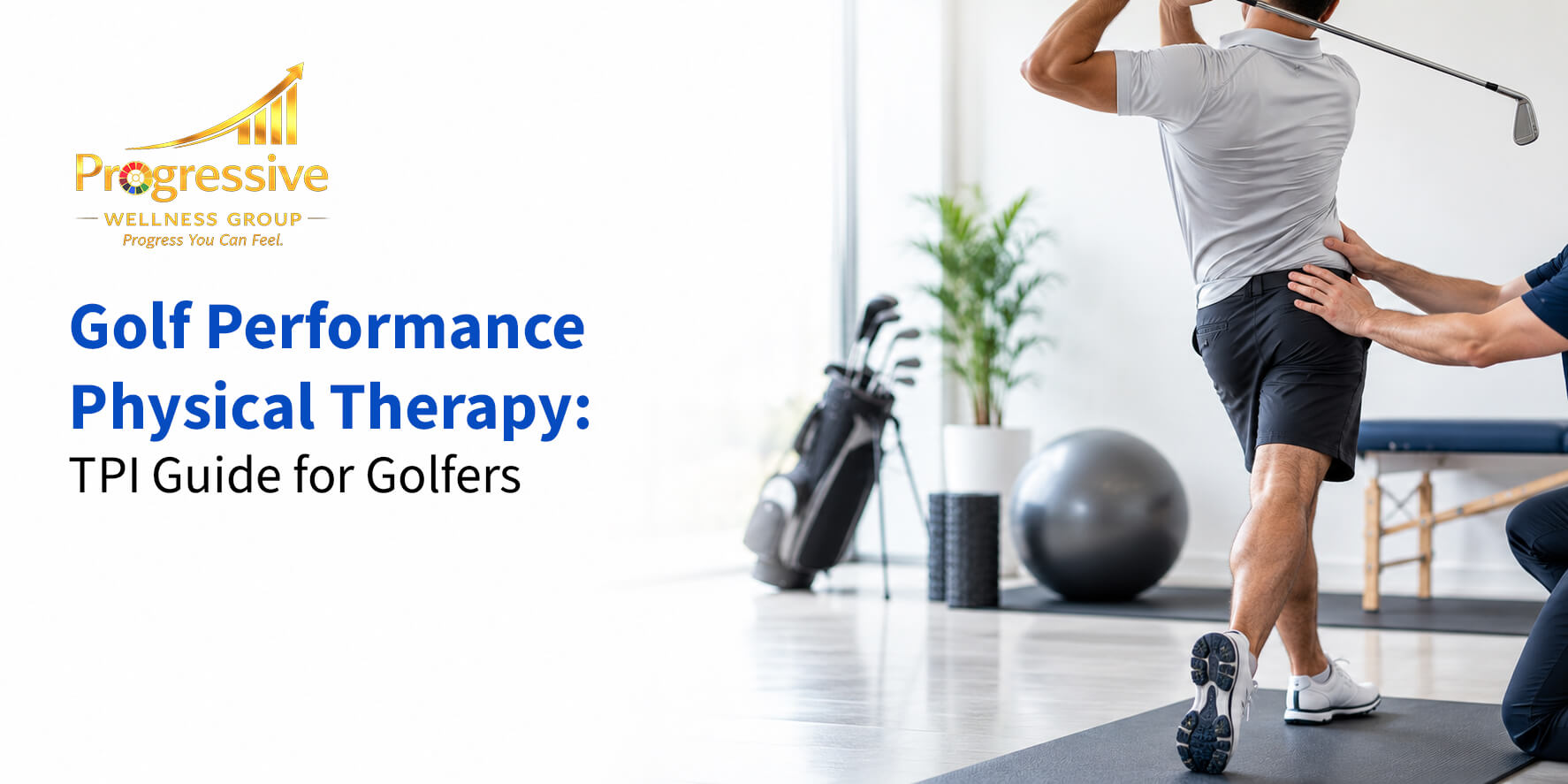
A physical therapist trained in this approach evaluates how your body moves through the process of your golf swing. Instead of looking at pain or injury in isolation, the assessment considers mobility, strength, stability, balance, and movement control, and how limitations in these areas may affect swing mechanics.
Golf performance physical therapy can help address physical factors such as:
- Limited Rotation: Improving the hips’ and spine’s ability to rotate through the swing.
- Movement Restrictions: Addressing mobility limitations that may lead to compensatory movements.
- Strength and Stability Deficits: Building the control needed to maintain efficient positions throughout the swing.
- Poor Movement Patterns: Retraining inefficient mechanics that can affect consistency or increase physical stress.
- Repetitive Strain: Preparing the body to handle the repeated rotation, loading, and weight transfer involved in golf.
Treatment may include movement assessments, corrective exercises, mobility work, strength training, and movement retraining. These techniques can complement the broader sports rehabilitation services offered by a clinic while tailoring care to the specific physical demands of golf.
Who Can Benefit From TPI Golf Performance Physical Therapy?
TPI-based golf physical therapy can benefit golfers at different skill levels and stages of their game. You don’t need to be a competitive player or have an existing injury to benefit from a golf-specific physical assessment.
It may be particularly helpful for:
- Recreational Golfers: Improve movement efficiency and stay comfortable during longer rounds.
- Competitive Golfers: Address physical limitations that may affect consistency, power, or repeatability.
- Older Golfers: Maintain mobility, strength, balance, and control as physical abilities change with age.
- Golfers Returning from Injury: Rebuild strength and movement capacity before progressing back to full golf activity.
- Players with Recurring Pain: Identify movement or physical factors that may contribute to ongoing discomfort.
- Injury-Conscious Golfers: Address mobility, stability, or strength limitations early on to support long-term participation.
The goal isn’t to change every golfer’s swing, but to help each player understand what their body can do and where targeted physical training may support better golf performance.
How Your Physical Limitations Can Affect Your Golf Swing
A golf swing is a coordinated chain of movement that transfers force from the ground through the legs, hips, spine, shoulders, and arms. When one area lacks the mobility, strength, or control needed for its role, another part of the body may compensate. These compensations can affect swing consistency, power, balance, and physical comfort.
Identifying these limitations early can support targeted joint mobility exercises and other corrective strategies designed around your individual movement needs.
Limited Hip Mobility
Your hips play a major role in rotation, weight transfer, and maintaining an efficient swing sequence. Restricted hip mobility can limit your ability to rotate during the backswing or clear your hips effectively through impact. This may cause the lower back or upper body to compensate, affecting both consistency and control.
Poor Thoracic Spine Mobility
The thoracic spine, or upper back, contributes substantially to the rotation required during a golf swing. If this area is restricted, the body may compensate by placing greater demands on the lower back or shoulders. Improving thoracic movement can support smoother rotation and more efficient force transfer.
Shoulder Mobility Restrictions
Adequate shoulder mobility helps golfers achieve a full backswing and controlled follow-through. Restrictions may shorten the swing or alter its timing and mechanics.
Rather than forcing the shoulder into positions it cannot comfortably reach, targeted mobility work can help support gradual mobility improvement and better movement control.
Weakness and Poor Core Stability
Your core helps connect the lower and upper body while transferring force throughout the swing. Insufficient strength or stability can make it harder to maintain posture and control as you rotate.
Strengthening the core and surrounding muscles can improve control and help create a more stable foundation for the swing.
Balance and Lower-Body Control
A golfer must maintain dynamic balance while shifting weight from the backswing through impact and into the follow-through. Poor lower-body control can make these weight shifts less predictable, potentially leading to inconsistent contact, reduced power, or difficulty maintaining a repeatable swing.
Recognizing these physical limitations doesn’t mean changing your swing unnecessarily. Instead, it helps identify whether your body has the movement capacity and control needed to perform the swing efficiently.
What Happens During a TPI Golf Physical Therapy Assessment?
A TPI-based assessment is more than a single movement test. It follows a structured process to understand how your body moves, where limitations exist, and how those factors may influence your golf performance.
Your physical therapist uses these findings to build a plan around your specific needs and goals.
1. Reviewing Your Golf and Injury History
The assessment begins with a conversation about your:
- Current or previous injuries and pain
- Golfing frequency and typical activity level
- Training and exercise habits
- Swing concerns or recent performance changes
- Goals for comfort, consistency, or performance
This background information gives your therapist important context before physical testing begins.
2. Evaluating Mobility and Flexibility
Your therapist examines mobility and flexibility in areas that contribute to an efficient golf swing, including the hips, thoracic spine, shoulders, and ankles. These findings help determine which joint mobility exercises and movement strategies may be appropriate for your program.
3. Assessing Strength, Stability, and Balance
Mobility is only one part of golf performance. Your assessment may also examine:
- Core Stability: How well you control your trunk during rotation
- Lower-Body Strength: Your ability to produce and control force
- Rotational Control: How effectively you manage rotational movement
- Balance: How well you maintain control during weight transfer
- Functional Movement: How different areas of your body work together
4. Identifying Movement Compensations
A limitation in one area can cause another part of the body to compensate. These patterns may not be obvious without a professional assessment.
Two golfers can have similar swing concerns but completely different physical causes, which is why an individualized approach is important.
5. Connecting Findings to Your Golf Goals
The assessment concludes by translating physical findings into practical goals for your game. Depending on your needs, your plan may focus on mobility improvement, strength, balance, pain reduction, movement quality, or overall performance.
Progress can then be monitored over time to determine how your body is responding and whether adjustments to your program are needed.
7 Ways TPI Physical Therapy Can Improve Your Golf Performance
A golf-specific physical therapy program is designed around the way your body moves during the swing. By addressing individual limitations, it can support the physical qualities that contribute to efficient movement, consistency, and comfortable play.
1. Greater Rotational Mobility
What it Improves:
- Hip Movement
- Spine Movement
- Shoulder Movement
Why it Matters:
Better mobility can make it easier to rotate through the backswing and downswing while reducing the need for compensatory movements. Targeted joint mobility exercises may be included based on your assessment.
2. Golf-Specific Strength
What it Improves:
- Force Production
- Muscular Endurance
Why it Matters:
Golf requires strength that can be controlled through rotation and weight transfer. A targeted program helps develop the strength needed to support these movements rather than focusing solely on general muscle development.
3. Better Balance and Stability
What it Improves:
- Core and Lower-Body Control
Why it Matters:
Stronger stability can help you maintain posture and control as your weight shifts throughout the swing, creating a more reliable physical foundation for movement.
4. More Efficient Swing Movement
What it Improves:
- Movement Coordination and Control
Why it Matters:
Physical restrictions can cause unnecessary compensations. Addressing relevant limitations may help your body move more efficiently and make the swing feel more controlled and repeatable.
5. More Consistent Ball Contact
What it Improves:
- Repeatability of Movement
Why it Matters:
Consistent contact depends partly on your ability to reproduce key movements. Physical therapy can address movement and control limitations that may interfere with that repeatability, without promising a specific change in handicap or distance.
6. Better Management of Golf-Related Pain
What it Improves:
- Movement Capacity around Problem Areas
Why it Matters:
Repetitive golf movements can place stress on the back, shoulders, hips, elbows, and knees. Individualized rehabilitation can address contributing physical limitations and help support a comfortable return to activity.
7. Long-Term Physical Readiness
What it Improves:
- Mobility
- Strength
- Movement Capacity
Why it Matters:
Your physical needs can change with age, injury history, and playing demands. Continued mobility improvement and strength training can help you maintain the physical qualities required to keep playing.
The value of TPI-informed therapy isn’t simply improving one physical quality at a time. Mobility, strength, stability, balance, and coordination work together during the golf swing. Addressing the right combination for your body can create a stronger foundation for playing efficiently and comfortably.
Can TPI Physical Therapy Help Prevent Golf Injuries?
Physical therapy cannot guarantee that a golfer will avoid injury, but it can help identify and address physical factors that may increase injury risk.
A TPI-informed approach looks for limitations in mobility, strength, stability, and movement control that could place unnecessary stress on the body during repetitive golf movements.
An individualized program may combine:
- Mobility Training: Addressing restrictions that affect rotation and movement.
- Strength and Stability Work: Building the physical capacity needed to handle the demands of golf.
- Movement Retraining: Improving inefficient patterns and reducing unnecessary compensations.
- Conditioning: Gradually preparing the body for practice, competition, or longer rounds.
- Recovery Strategies: Supporting appropriate rest and progression between golf sessions.
Injury prevention also needs to reflect how you actually play. A golfer who plays occasionally has different physical demands from someone who practices every day or competes regularly. Your training and recovery plan should account for your playing frequency, fitness level, injury history, and individual movement needs.
Common Golf Injuries a Physical Therapist Can Help Address
Golf involves repeated rotation, weight transfer, and loading through the upper and lower body. Depending on the underlying cause, a physical therapist may evaluate and treat conditions such as:
| Common Concern | How Physical Therapy Can Help |
| Low Back Pain | Addressing mobility, strength, movement patterns, and contributing physical factors, including chronic lower back pain that persists despite rest. |
| Golfer’s Elbow | Improving strength and load tolerance around the elbow and forearm while addressing contributing movement patterns. |
| Tennis Elbow | Assessing wrist, forearm, and upper-extremity mechanics and gradually rebuilding strength and tolerance. |
| Shoulder Pain | Evaluating shoulder mobility, stability, and strength in relation to golf-specific movements. |
| Hip Pain | Identifying mobility or strength limitations that may affect rotation and weight transfer. |
| Knee Pain | Assessing lower-body strength, stability, balance, and movement mechanics that may influence knee loading. |
| Wrist and Forearm Problems | Addressing strength, mobility, and tolerance to the repetitive demands of gripping and swinging a club. |
Prevention Starts with Understanding Your Body
The goal isn’t to eliminate every possible source of injury. Instead, TPI-informed physical therapy helps you understand your body’s current capabilities and address limitations before they interfere with your ability to practice, compete, or enjoy a round of golf.
What Does a TPI Golf Performance Program Include?
After your assessment, your physical therapist develops a program based on your movement patterns, physical limitations, injury history, and golf goals. While no two programs are exactly alike, a comprehensive plan may include the following:
▶ Watch: Progressive Golf Performance Program
Individualized Exercise Programming
Your program may combine joint mobility exercises, strength training, stability work, rotational exercises, and balance drills. Each component is selected to address the specific limitations identified during your evaluation rather than following a generic golf workout.
Movement Retraining
Exercise alone may not be enough if inefficient movement patterns have become habitual. Movement retraining helps you develop better control and coordination, reinforcing efficient movement patterns that can carry over into your golf swing and everyday activities.
Progress Tracking
Your physical therapist can periodically reassess mobility, strength, stability, and movement quality to measure progress. Exercises and training intensity can then be adjusted as your capabilities improve, helping your program remain appropriate at each stage.
At-Home Strategies
Your in-clinic sessions are only part of the process. A personalized home program helps reinforce the work completed during treatment. Consistency with your joint mobility exercises and other prescribed activities between appointments and golf sessions can support continued progress.
When Should a Golfer See a Physical Therapist?
Not every ache or change in performance means you have a serious problem. However, persistent discomfort, recurring injuries, or noticeable changes in how you move can be good reasons to seek a professional evaluation.
Addressing physical limitations early on may help prevent them from becoming more difficult to manage.
Consider seeing a physical therapist if you notice:
Pain or Recurring Issues
- Pain during or after playing
- Injuries that repeatedly return
- Discomfort that affects your ability to practice or complete a round
- Difficulty returning to golf after surgery or an injury
Changes in Movement
- Noticeable loss of mobility
- Difficulty rotating through your swing
- Trouble maintaining balance or stability during play
- A movement that feels restricted, uncomfortable, or different than usual
Changes in Performance
- Declining performance without an obvious technical explanation
- Difficulty maintaining consistency as a round progresses
- A noticeable change in your ability to generate or control movement
Preparing for the Season
You don’t have to wait until something hurts to seek an evaluation. Golfers can also benefit from a physical assessment before a new season, particularly when increasing practice frequency, returning after time away, or preparing for more demanding play.
A proactive plan focused on mobility improvement, strength, balance, and movement control can help prepare your body for the demands of the season.
How Quickly Can You See Results From Golf Performance Physical Therapy?
There is no universal timeline for results from golf physical therapy. Progress depends on your starting condition, treatment goals, the limitations being addressed, and how consistently you follow your program. Pain, mobility, strength, and swing performance can also improve at different rates.
Progress Often Happens in Phases
Phase 1: Reduce Symptoms and Restore Movement
The initial focus may be on managing discomfort and restoring comfortable movement. Your therapist may introduce appropriate mobility work and foundational exercises based on your individual needs.
Phase 2: Build Mobility, Strength, and Control
As movement improves, treatment can progress toward strength, stability, balance, and mobility improvement. Exercises are gradually adjusted as your body develops greater capacity and control.
Phase 3: Develop Golf-Specific Movements
Once you have built a stronger physical foundation, your program can become more specific to golf. Rotational exercises, weight transfer, balance, and movement patterns related to your swing may be incorporated.
Phase 4: Progress Toward Full Golf Activity
The final phase focuses on applying your improved physical abilities to practice and play. Your therapist can guide your progression as you return to longer rounds, increased practice, or more demanding competitions.
What Determines Your Timeline?
Your rate of progress can be influenced by:
- Your current pain and physical function
- The type and severity of the limitation
- Previous injuries or time away from golf
- Consistency with your prescribed program
- How your body responds as activity increases
Focus on Progress, Not a Deadline
Every golfer responds differently, so progress should be measured by meaningful changes rather than a specific number of sessions or weeks. These changes may include reduced discomfort, greater mobility, improved balance, increased strength, or better movement control during your swing.
Regular reassessments allow your physical therapist to monitor your response and adjust your program as your capabilities change. The goal is steady and sustainable progress that prepares your body for the demands of golf, not simply reaching a predetermined deadline.
How to Prepare for Your TPI Golf Performance Physical Therapy Evaluation
A little preparation can help your physical therapist understand your goals, playing habits, and physical history from the start. Having the right information and clothing ready can also make the evaluation more productive.
1. Bring Your Golf History
Be prepared to discuss:
- How often you play and practice
- Your typical golf activities and training routine
- Recent changes in your swing or performance
- Previous injuries, surgeries, or recurring discomfort
- Any activities that increase or reduce your symptoms
2. Know Your Goals
Think about what you want to accomplish through the evaluation. Your priorities may include reducing pain, improving mobility, building strength, returning to golf after an injury, improving consistency, or maintaining your current level of play. Clear goals help your therapist tailor the evaluation and treatment plan to your needs.
3. Wear Comfortable Clothing
Choose clothing that allows you to move freely. Since your therapist may assess mobility, strength, balance, and movement patterns, comfortable athletic clothing can make it easier to complete the physical portion of the evaluation.
4. Bring Relevant Medical Information
If available, bring information that may help your therapist understand your physical history, such as:
- Previous imaging or test results
- Surgical records or history
- Current treatment information
- Previous rehabilitation records
- A list of relevant medications or recommendations from other providers
5. Come Ready to Ask Questions
Your evaluation is also an opportunity to understand what may be affecting your movement and golf performance. Ask about your assessment findings, recommended exercises, expected progression, and how the program can fit into your regular golf routine.
The better your therapist understands your history and goals, the more effectively your evaluation can be tailored to your needs.
Why Choose Progressive Wellness Group for Golf Performance Physical Therapy?
Your golf swing depends on more than technique. Mobility, strength, stability, balance, and movement control all influence how efficiently and comfortably you play. Progressive Wellness Group combines TPI expertise with individualized care to address the physical factors that may affect your performance.
Dr. Jim Storhok holds TPI certifications in Level 1 Evaluation, Medical, Power, and Junior Golf, bringing a golf-specific perspective to physical therapy. Each program is tailored to your assessment findings, goals, and physical needs rather than a one-size-fits-all approach. When appropriate, care may also incorporate non-surgical treatments to address persistent pain alongside performance goals.
Whether you are managing an injury, experiencing limited mobility improvement, or preparing for a new season, golf performance physical therapy can help you build a stronger physical foundation for golf.
Are you ready to move better and play with confidence? Schedule a consultation with our experts today to discuss your goals and learn how a personalized golf-focused evaluation can help.
Frequently Asked Questions (FAQs)
Can I combine golf performance physical therapy with lessons from a golf instructor?
Yes. Golf physical therapy and instruction address different aspects of performance. A physical therapist can address movement limitations, while your instructor focuses on technique. Working together can help ensure your swing changes match your physical capabilities.
Do I need to bring my golf clubs to a physical therapy appointment?
It depends on the evaluation and clinic. If golf-specific movement or swing assessment is included, bringing your usual clubs may be helpful. Check with the clinic beforehand so you know what equipment, clothing, or records to bring.
Can physical therapy help if my swing feels different after taking time off?
Yes. Returning after a long break can reveal changes in mobility, strength, balance, or conditioning. A physical therapist can evaluate your current capabilities and help determine whether targeted treatment or gradual conditioning is appropriate before increasing your golf activity.
Is golf physical therapy worthwhile if I only play occasionally?
Yes. Occasional golfers can benefit when preparing for a golf trip, returning after time away, managing physical limitations, or trying to remain comfortable during rounds. Treatment can be adjusted to your playing frequency, fitness level, and individual goals.
Should I see a physical therapist before starting golf lessons?
It may be beneficial if physical limitations affect your ability to reach or maintain certain swing positions. An evaluation can identify mobility, strength, or stability restrictions that may be useful for you and your golf instructor to consider.
What does a TPI physical therapist do?
A TPI physical therapist evaluates how mobility, strength, stability, balance, and movement patterns influence your golf swing. They identify physical limitations and create personalized exercises or treatment strategies to improve movement efficiency, performance, and injury resilience.
Can physical therapy increase golf swing speed?
Yes. Physical therapy can help increase golf swing speed by addressing limitations in mobility, strength, stability, and power. Improving these physical factors can help golfers generate force more efficiently while maintaining control and reducing unnecessary strain.