
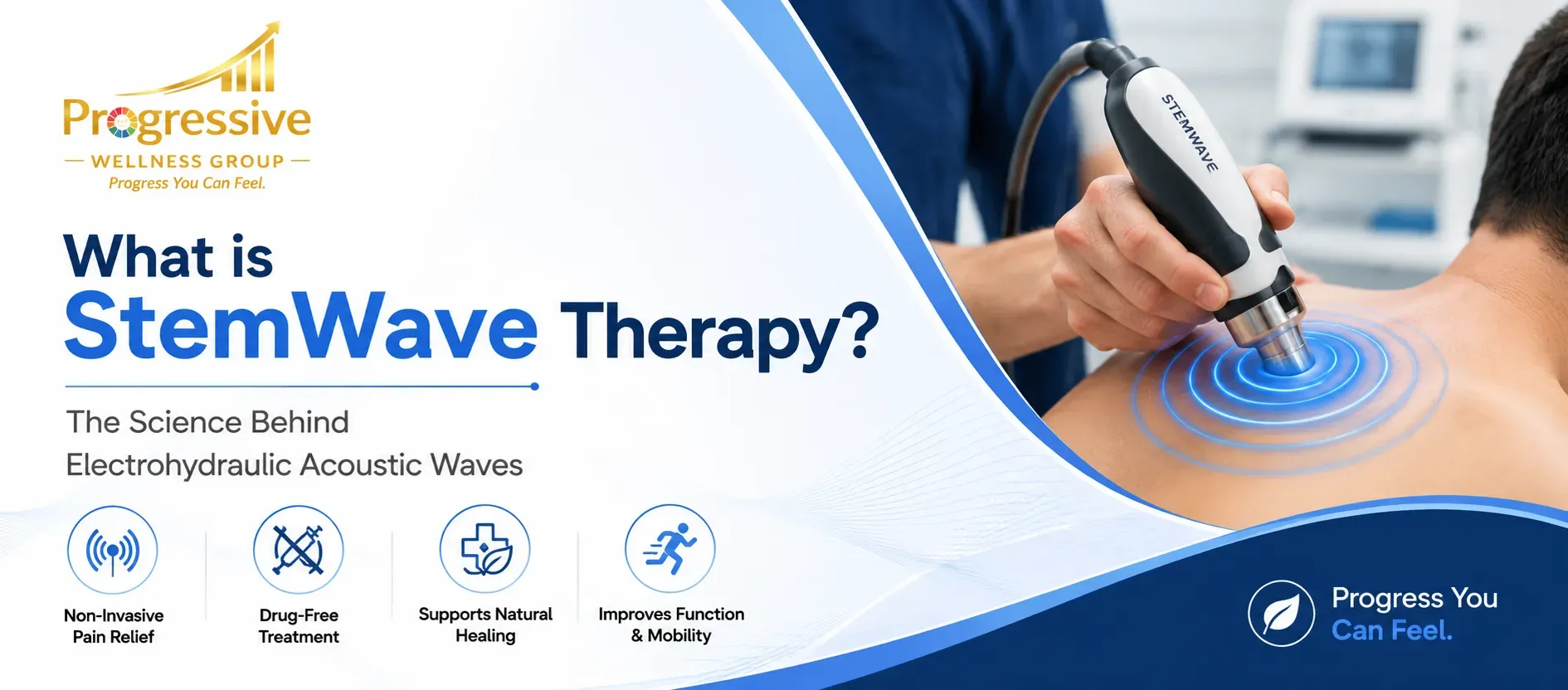
Chronic pain often leads people toward medications, injections, or surgery that may only provide temporary relief. StemWave therapy offers a different approach.
This advanced and non-invasive treatment uses focused electrohydraulic acoustic wave therapy to stimulate the body’s natural healing response and support tissue repair at the cellular level.
Despite its name, StemWave does not actually involve stem cell injections. Instead, it delivers precisely targeted sound energy to damaged areas, helping reduce pain and improve function.
Frequently Asked Questions (FAQs)If you’re exploring innovative treatment options at a regenerative wellness center, understanding the science behind StemWave therapy is an important first step.
What is StemWave Therapy?
StemWave therapy is a non-invasive treatment that uses a handheld device to deliver focused acoustic waves to injured, inflamed, or painful areas of the body. The sound wave therapy stimulates the body’s natural healing processes, helping to repair damaged tissue and reduce pain at its source rather than simply masking symptoms.
Key things to know about StemWave therapy:
- It does not involve stem cell injections or other biologic treatments.
- It works by activating the body’s natural regenerative and repair mechanisms.
- It encourages healing within damaged tissues using focused acoustic wave technology.
- It’s a drug-free and non-surgical treatment option for chronic pain and musculoskeletal conditions.
Unlike pain medications that temporarily block discomfort or cortisone injections that suppress inflammation, the therapy is designed to support long-term tissue healing, reduce inflammation naturally, and improve overall function by addressing the root cause of pain.
Understanding Electrohydraulic Acoustic Wave Therapy
To understand the science behind electrohydraulic acoustic wave therapy, it helps first to understand what acoustic waves are and why the method used to generate them matters.
What are Acoustic Waves?
Acoustic waves are mechanical pressure waves that travel through solids, liquids, and gases. In medicinal applications, these waves are delivered into the body at controlled energy levels to stimulate biological responses.
Unlike the sound waves we hear every day, therapeutic acoustic waves carry significantly more energy and can penetrate deep into muscles, tendons, ligaments, and joints.
The Electrohydraulic Difference
Not all acoustic wave technologies work the same way. Electrohydraulic systems are among the most advanced forms of focused acoustic wave technology because they can deliver high-energy waves with exceptional precision.
Here’s how the process works:
- A high-voltage electrical spark is created inside a fluid-filled chamber.
- The spark generates a powerful pressure wave within the fluid.
- A specially designed reflector focuses that wave into a targeted treatment area.
- The focused wave then delivers mechanical energy deep into damaged or painful tissues.
Focused Waves vs. Radial Waves
A key benefit of electrohydraulic technology is its precision. While some acoustic wave systems spread energy across a wide area, focused acoustic waves deliver energy to a specific location beneath the skin. This helps target deeper tissues without affecting surrounding areas.
This targeted approach offers several benefits:
- Greater penetration into joints, tendons, ligaments, and deep soft tissues
- More precise energy delivery to the area being treated
- Improved stimulation of the body’s natural healing response
- Enhanced therapeutic effectiveness for chronic and hard-to-treat conditions
By delivering energy exactly where it’s needed, electrohydraulic acoustic wave therapy can help support tissue repair and recovery without surgery, injections, or medication.
How Does StemWave Therapy Work? The Science of Healing
Many patients wonder what happens during treatment and why it can help with chronic pain and stubborn injuries. The answer lies in the body’s natural ability to heal.
By delivering focused acoustic energy to damaged tissues, StemWave therapy stimulates cellular activity and encourages biological processes that support repair, recovery, and improved function.
Step 1: Mechanical Energy Delivery
During treatment, a provider moves the StemWave applicator over the targeted area. The device delivers focused acoustic wave pulses that travel through the skin and underlying tissues to reach the source of pain or dysfunction. Because the treatment is completely non-invasive, there are no incisions or injections.
Step 2: Mechanotransduction – Turning Mechanical Energy into Healing Signals
The therapeutic effects of StemWave begin with a process called mechanotransduction. This occurs when cells detect mechanical stimulation and convert it into biological signals that activate healing pathways.
A simple way to think about it is this: when your body’s cells experience controlled pressure and vibration, they receive a signal to begin repair and regeneration. StemWave therapy uses focused acoustic energy to trigger this natural response in tissues that have become damaged, inflamed, or slow to heal.
Step 3: Activation of Cellular Repair Pathways
Once these healing signals are activated, several beneficial biological responses may occur:
- Enhanced Cellular Communication: Cells coordinate more effectively to support tissue repair.
- Improved Blood Flow: New capillaries may develop, increasing the delivery of oxygen and nutrients to injured areas.
- Cellular Activation: Important repair cells, such as fibroblasts and tendon cells, become more active.
- Tissue Remodeling: Damaged or disorganized tissues can gradually be replaced with healthier, stronger tissue.
- Reduced Chronic Inflammation: The body is better able to regulate inflammatory processes that contribute to ongoing pain.
Understanding how StemWave therapy works helps explain why this treatment focuses on supporting the body’s natural healing response rather than simply providing temporary symptom relief.
What Happens During a StemWave Therapy Session?
If you’re considering StemWave treatment, knowing what to expect can help you feel more comfortable and confident about the process. Treatment is non-invasive, requires no anesthesia, and is typically completed in a short office visit.
Initial Evaluation
Your care begins with a comprehensive assessment to determine whether StemWave therapy is appropriate for your condition. During this evaluation, your provider will:
- Review your medical history and current symptoms
- Identify the source of your pain or dysfunction
- Discuss your treatment goals
- Determine whether any underlying conditions require special consideration
Certain individuals, such as those with active cancer at the treatment site, blood-clotting disorders, or pregnancy, may need additional evaluation before the treatment.
The Treatment Process
A typical treatment session follows these simple steps:
- A specialized gel is applied to the skin to help transmit the acoustic waves efficiently.
- The StemWave applicator is positioned over the targeted treatment area.
- Focused acoustic wave pulses are delivered to the affected tissues.
- The provider may adjust the treatment area and energy settings based on your comfort level and clinical needs.
Most patients describe the sensation as a deep tapping or rhythmic pressure. Areas with significant inflammation or tissue damage may be more sensitive, but treatment settings can usually be adjusted to maximize comfort.
Session Length and Recovery
Most sessions last between 15 – 20 minutes per treatment area. Because the procedure is completely non-invasive, there is typically no recovery time, which allows patients to return to their normal daily life immediately after treatment.
While some individuals notice improvements after the first few sessions, most treatment plans involve multiple visits over several weeks to support optimal healing and long-term results.
Conditions Commonly Treated with StemWave Therapy
StemWave treatment is commonly used to help patients experiencing chronic pain, soft tissue injuries, and musculoskeletal conditions that have not responded well to traditional treatments.
Joint Pain
- Knee Pain (including osteoarthritis-related discomfort)
- Hip Pain
- Shoulder Pain (including rotator cuff injuries and tendinopathy)
Tendon Disorders
- Achilles Tendinopathy
- Tennis Elbow (lateral epicondylitis)
- Golfer’s Elbow (medial epicondylitis)
Foot and Ankle Conditions
- Plantar Fasciitis
- Chronic Heel Pain
Sports and Overuse Injuries
- Repetitive Stress Injuries
- Chronic Soft Tissue Damage
- Delayed Recovery from Sports-Related Injuries
Spine and Soft Tissue Pain
- Chronic Low Back Pain
- Neck Pain Caused by Musculoskeletal Dysfunction
- Myofascial Trigger Point Pain
Because every patient’s condition is unique, treatment recommendations should be based on a thorough clinical evaluation. For individuals experiencing nerve-related symptoms such as tingling, numbness, or burning sensations, complementary therapies may also be beneficial.
Key Benefits of StemWave Therapy
One of the reasons StemWave treatment has gained attention in regenerative treatment medicine is its ability to support healing without the risks and recovery time associated with more invasive treatment options. Key benefits include:
- Non-Invasive Treatment: No surgery, incisions, or injections are required. Treatment is delivered externally using focused acoustic waves.
- Drug-Free Pain Management: Provides a non-pharmaceutical option for individuals seeking alternatives to long-term pain medications, steroid injections, or other symptom-management approaches.
- Supports the Body’s Natural Healing Process: Rather than simply masking pain, StemWave therapy is designed to stimulate biological processes involved in tissue repair and recovery.
- Targets the Source of Discomfort: Focused acoustic waves can reach deeper tissues, helping providers deliver treatment precisely where it’s needed.
- Quick and Convenient Sessions: Most treatment sessions take only 15 – 20 minutes, making it easy to fit care into a busy schedule.
- Little to No Recovery: Patients can typically return to work, exercise, and other normal daily activities immediately after the treatment.
- Personalized Treatment Approach: Therapy can be adjusted based on the condition being treated, the location of pain, and each patient’s individual needs.
For many patients, these advantages make StemWave therapy an appealing option for addressing chronic pain, improving mobility, and supporting long-term musculoskeletal health.
StemWave Therapy vs. Traditional Pain Treatments: Which One is Right for You
When exploring treatment options for chronic pain or musculoskeletal injuries, it’s important to understand how different approaches work and what outcomes they are designed to achieve.
While medications, injections, and surgery can play an important role in certain cases, StemWave therapy offers a non-invasive alternative that focuses on supporting the body’s natural healing processes.
The comparison below highlights some of the key differences between StemWave treatment and other commonly used treatment methods:
| Feature | StemWave Therapy | Cortisone Injection | Surgery |
| Invasiveness | Non-invasive | Minimally invasive | Invasive |
| Drug Use | None | Steroid medication | Anesthesia and post-operative medications |
| Primary Goal | Stimulate natural healing | Reduce inflammation and pain | Structural repair or correction |
| Recovery Time | Little to none | Minimal | Days to weeks or longer |
| Addresses the Root Cause | Supports tissue repair and recovery | May provide temporary symptom relief | Depends on the condition being treated |
The right treatment depends on your diagnosis, symptoms, and overall health. However, for many patients seeking a drug-free and non-surgical option, StemWave treatment can be an effective way to promote healing, improve function, and reduce pain without the recovery time associated with more invasive procedures.
5 Common Myths about StemWave Therapy
As StemWave treatment becomes more widely recognized, misconceptions about how it works and what it can achieve are also becoming more common. Understanding the facts can help you make informed decisions about whether this treatment is right for you.
Myth #1: StemWave Therapy Uses Stem Cell Injections
Fact: StemWave therapy does not involve stem cell injections or any other injectable biologic treatment. The name refers to the therapy’s ability to stimulate the body’s natural regenerative processes and healing responses. The treatment is completely non-invasive and performed externally using focused sound wave therapy.
Myth #2: It’s the Same as Therapeutic Ultrasounds
Fact: Although both treatments use energy waves, they work in very different ways.
- Therapeutic ultrasounds primarily use low-energy sound waves to generate heat within tissues.
- StemWave therapy delivers focused acoustic energy designed to stimulate cellular activity and activate the body’s natural healing mechanisms.
Myth #3: The Treatment Is Painful
Fact: Most patients tolerate treatment very well. Many describe the sensation as a tapping, pulsing, or deep-pressure feeling. Areas with significant inflammation or tissue damage may be more sensitive, but providers can adjust treatment settings to maximize comfort.
Myth #4: Everyone Experiences Immediate Results
Fact: Healing takes time. While some patients notice improvements after the first few treatments, others may require several sessions before experiencing meaningful changes. Results may vary based on factors such as the condition being treated, its severity, overall health, and the body’s healing response.
Myth #5: Surgery is Always the Better Option
Fact: Surgery may be necessary for certain structural injuries and advanced conditions, but it’s not always the first or best solution. For many chronic tendon, ligament, and soft tissue conditions, conservative treatments such as StemWave therapy may help reduce pain, improve function, and support healing without the risks, costs, or recovery time associated with surgery.
Separating fact from fiction is essential when evaluating any treatment option. By understanding what StemWave treatment can and cannot do, patients can have more productive conversations with their providers and make confident decisions about their care.
Who Can Benefit from StemWave Therapy?
While StemWave treatment can be highly effective for many musculoskeletal conditions, the best results occur when the therapy is matched to the right patient. A comprehensive evaluation helps determine whether this therapy is appropriate for your specific needs and goals.
Ideal Candidates for StemWave Therapy
You may be a good candidate if you:
Have Chronic Pain
StemWave treatment is often recommended for individuals experiencing pain that has persisted for three months or longer, especially when traditional treatments have provided only temporary or limited relief.
Lead an Active Lifestyle
Athletes, fitness enthusiasts, and active adults frequently choose StemWave therapy because it requires little to no recovery time. Many patients can continue their normal exercise routines and daily activities throughout the treatment.
Want to Avoid Surgery
If you’ve been advised to consider surgery but would prefer to explore conservative treatment options first, StemWave treatment may offer a non-invasive alternative worth discussing with your provider.
Want to Reduce Dependence on Pain Medications
Patients looking to minimize the use of pain medications, steroid injections, or other symptom-management treatments often appreciate StemWave’s focus on supporting the body’s natural healing processes.
When Additional Evaluation may be Needed
Although StemWave therapy is considered safe for most patients, certain situations require a more detailed clinical assessment before treatment.
Your provider may recommend additional evaluation if you have:
- Active cancer at or near the treatment area
- Blood clotting disorders, or are currently taking anticoagulant medications
- A pacemaker or other implanted electronic devices near the treatment site
- A recent fracture that is still healing
- An open wound or active skin infection in the treatment area
- Severe peripheral vascular disease
- Pregnancy
These factors do not automatically rule out treatment, but they should be carefully reviewed to ensure therapy is both safe and appropriate.
The best way to determine whether StemWave treatment is right for you is through a personalized consultation. A qualified provider at a regenerative wellness center can evaluate your condition, discuss your goals, and develop a treatment plan tailored to your needs.
Experience Non-Invasive StemWave Therapy at Progressive Wellness Group
StemWave therapy is changing the way chronic pain and musculoskeletal injuries are treated. By using focused acoustic wave technology to stimulate the body’s natural healing response, this non-invasive treatment can help support tissue repair, improve function, and address the underlying source of pain without relying on medications, injections, or surgery.
Progressive Wellness Group, the most trusted StemWave therapy provider in Rochester Hills, goes beyond symptom management. Our team takes a personalized and patient-centered approach to help identify the root cause of pain and develop customized care plans focused on long-term recovery and improved quality of life.
Patients choose Progressive Wellness Group for:
- Comprehensive evaluations and individualized treatment plans
- Advanced StemWave technology and regenerative therapies
- A focus on addressing the underlying cause of pain, not just symptoms
- Experienced providers dedicated to patient education and outcomes
- Non-invasive treatment options designed to support natural healing
- Integrated care solutions tailored to each patient’s health goals
Whether you’re dealing with chronic joint pain, tendon injuries, sport-related conditions, or persistent musculoskeletal discomfort, our team is committed to helping you find the most effective path forward.
If you’re ready to explore a non-surgical approach to pain relief and recovery, the team at Progressive Wellness Group can help. Schedule a consultation today to learn whether StemWave therapy is right for you and discover how regenerative treatments can support your journey toward lasting wellness.
One Response