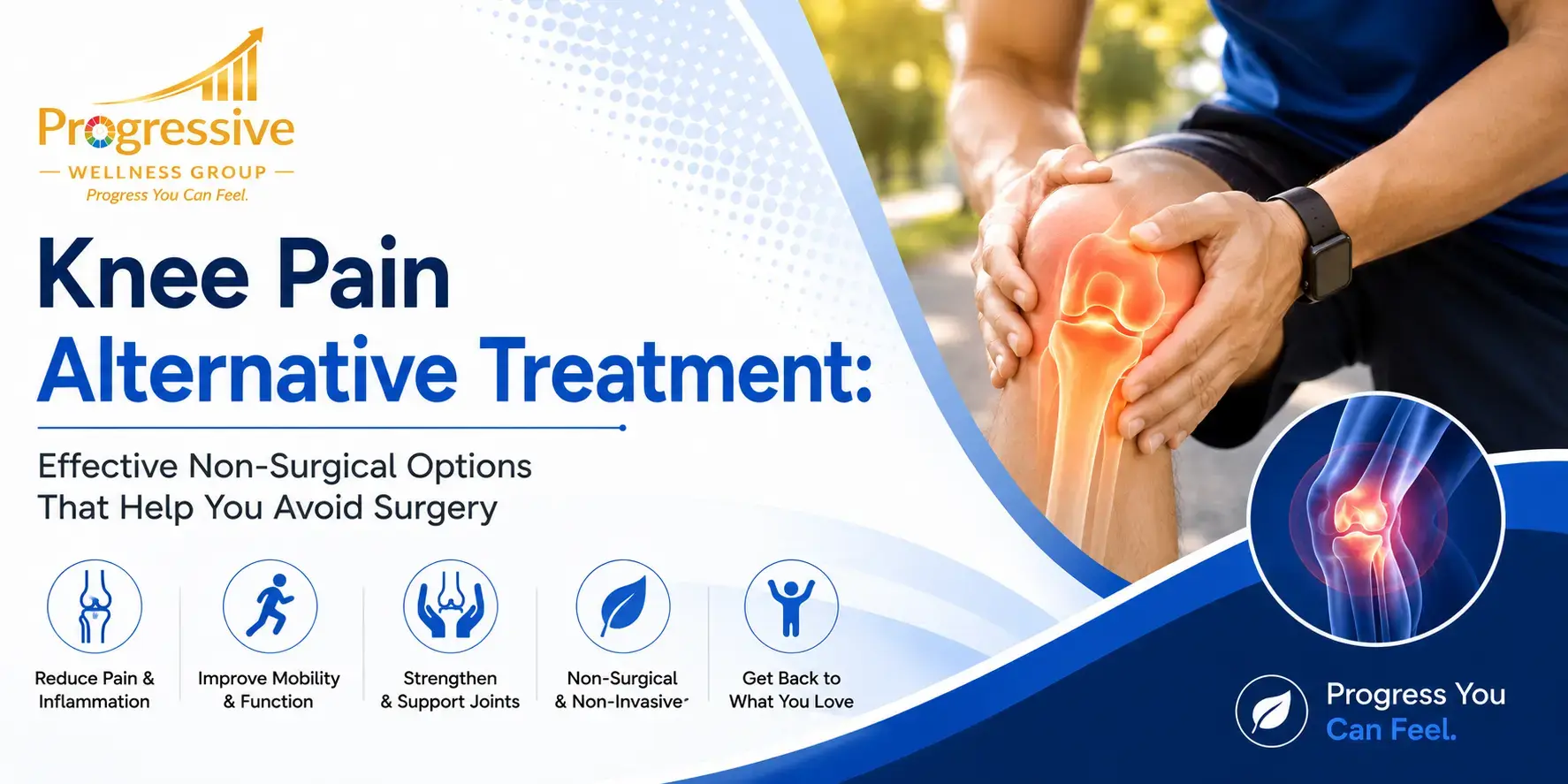
Every step shouldn’t have to come with pain. If knee discomfort is making it harder to walk, exercise, or enjoy daily activities, surgery may not be your only option. Knee pain alternative treatment focuses on relieving pain, restoring mobility, and helping you stay active without an operation.
From targeted rehabilitation to advanced non-invasive therapies, today’s treatment options are designed to address the root cause of pain while supporting long-term joint health. In this guide, you’ll explore effective solutions, understand how they work, and discover which approach may be right for your needs.
Understanding the Root Cause of Knee Pain
Lasting knee pain relief starts with identifying the real cause behind your discomfort. The knee is a complex joint made up of bones, cartilage, ligaments, tendons, and fluid-filled structures that help support movement. Pain can develop from damage, inflammation, injury, or gradual wear and tear.
Treating only the symptoms may provide temporary relief, but understanding the underlying issue helps create a more effective treatment plan. For example, knee pain caused by cartilage damage may require a different approach than pain caused by a tendon injury or ligament problem. A proper evaluation is the first step toward choosing the right non-surgical joint pain treatment and improving long-term mobility.
Common Causes of Knee Pain
Knee pain can develop from several conditions, including:
- Osteoarthritis: Gradual cartilage breakdown that can cause stiffness, swelling, and discomfort during movement.
- Rheumatoid Arthritis: An inflammatory condition that affects the joints and may lead to ongoing pain and swelling.
- Meniscus Tears: Damage to the knee’s cushioning cartilage that can cause pain, clicking, or limited movement.
- Ligament Injuries: ACL, MCL, and other ligament sprains or tears that may affect knee stability.
- Patellar Tendonitis: Irritation of the tendon connecting the kneecap to the shinbone, often linked to repetitive activity.
- Bursitis: Inflammation of small fluid-filled sacs that reduce friction around the knee joint.
- Cartilage Damage: Wear or injury to the protective cartilage that helps joints move smoothly.
- Sports and Overuse Injuries: Repetitive stress from physical activities that can strain knee structures.
- Age-Related Changes: Natural joint changes over time that may contribute to pain and reduced flexibility.
Symptoms that may Require Professional Evaluation
Not every knee ache signals a serious problem, but certain symptoms may indicate an underlying joint issue that requires attention. Recognizing these warning signs early can help you seek the right care, prevent further discomfort, and explore appropriate treatment options before the condition worsens.
- Persistent Pain that Doesn’t Improve: Knee pain lasting several weeks or affecting daily activities may require targeted care and knee pain relief without surgery options.
- Swelling That Keeps Returning: Ongoing or recurring swelling can indicate inflammation, injury, or joint damage that may need targeted treatment.
- Stiffness After Rest or Inactivity: Difficulty moving the knee after waking up or after sitting for long periods may indicate joint irritation or reduced mobility.
- Clicking, Catching, or Locking Sensations: Unusual sounds or feelings of the knee getting stuck may point to issues involving cartilage, ligaments, or other joint structures.
- Feeling of Instability or Weakness: If your knee feels like it may give out while walking, climbing stairs, or exercising, it could indicate a problem affecting joint support.
- Limited Range of Motion: Trouble bending, straightening, or fully moving your knee can impact everyday tasks and may require a closer assessment.
Early evaluation helps determine the cause of your symptoms and whether options such as non-surgical joint pain treatment can help improve comfort, mobility, and quality of life.
When Should You Consider Knee Surgery?
Surgery may be recommended in specific situations, especially when conservative options no longer provide relief or when severe joint damage affects mobility and safety. It’s typically considered when:
- Structural damage significantly impacts knee function.
- Instability makes daily activities difficult or unsafe.
- Pain continues despite consistent non-surgical treatment care.
- Quality of life is greatly affected by limited mobility.
However, surgery is not always the first step. Many people find meaningful improvement through a personalized knee pain alternative treatment plan before reaching that stage. Exploring conservative options first can help determine the most suitable approach for long-term joint health.
What is Non-Surgical Knee Pain Treatment?
Non-surgical knee pain treatment refers to conservative therapies designed to reduce pain, improve mobility, and support joint health without surgery. Depending on the cause of knee pain, treatment may include physical therapy, regenerative medicine, injections, lifestyle changes, and advanced non-invasive technologies such as acoustic wave therapy.
Why Choose Non-Surgical Knee Pain Treatments? Key Benefits to Consider
Choosing a conservative non-surgical joint pain treatment approach can offer several advantages, especially for people with mild to moderate knee issues or those who want to explore effective options before considering surgery. These treatments focus on reducing discomfort, improving mobility, and supporting long-term joint function.
Key benefits include:
- Avoid Surgery-Related Risks: Reduce exposure to risks associated with anesthesia and surgical procedures.
- Faster Recovery Time: Return to daily activities sooner with less recovery time compared to surgery.
- Lower Treatment Costs: Non-surgical options are often more affordable than major surgical procedures.
- Less Disruption: Experience fewer recovery challenges and less discomfort during the healing process.
- Preserve Natural Joint Function: Support and protect your existing joint structure whenever possible.
- Delay or Avoid Replacement Surgery: Many patients may postpone or avoid joint replacement surgery.
- Personalized Care Plans: Treatment can be tailored to your condition, goals, lifestyle, and activity level.
For the right candidate, alternative knee pain treatments can be an effective first step toward improved mobility and better quality of life. Even if surgery becomes necessary later, building strength and improving joint health beforehand may support a smoother recovery.
Top Alternative Treatments for Knee Pain
There is no one-size-fits-all solution for knee pain. The right treatment depends on the cause, severity, lifestyle, and personal goals. Today, many patients explore knee pain relief without surgery through a combination of rehabilitation, regenerative therapies, and minimally invasive procedures designed to reduce pain and improve mobility.
The most effective non-surgical joint pain treatment plan is often personalized and may include one or more of the following options:
1. Physical Therapy: Strengthen and Support the Knee
Physical therapy is often the foundation of a successful knee pain management plan. It focuses on improving the strength, flexibility, and stability of the muscles that support the joint.
How it helps:
- Strengthens muscles around the knee to improve support.
- Improves flexibility and range of motion.
- Corrects movement patterns that may contribute to pain.
- Helps with arthritis, sports injuries, and post-injury recovery.
A customized therapy program not only helps reduce discomfort but also teaches you how to move safely and protect your knee for long-term results.
2. Regenerative Medicine: Support the Body’s Natural Healing Process
Regenerative treatments focus on supporting the body’s ability to repair damaged tissues rather than only managing symptoms. Many of these options are considered a non-invasive treatment approach or involve minimally invasive procedures.
Platelet-Rich Plasma (PRP) Therapy
PRP therapy uses concentrated platelets from your own blood and delivers them to the affected area to support tissue healing.
Potential benefits include:
- Use your own biological materials.
- May support tendon healing and help manage mild arthritis.
- Requires minimal recovery time compared to surgery.
- It’s often combined with rehabilitation for better outcomes.
Stem Cell Therapy
Stem cell treatments aim to support tissue repair by using regenerative cells that may help address certain types of joint damage. Since research continues to develop, results can vary, and a qualified provider can help determine whether it’s appropriate for your condition.
Acoustic Wave Therapy
Acoustic wave therapy uses focused sound waves to stimulate circulation and encourage the body’s natural healing response without incisions or extended recovery time.
If you want to understand this approach in more detail, learn what stemwave therapy is and how it may help with chronic joint and tendon discomfort.
3. Hyaluronic Acid Injections: Improve Joint Cushioning
Hyaluronic acid injections add lubrication to the knee joint, helping reduce friction between joint surfaces. They’re commonly considered for people with moderate osteoarthritis who have not found enough relief from basic treatments.
Key points:
- Helps improve joint cushioning.
- May reduce stiffness and discomfort.
- Results can vary from person to person.
- Relief may last several months for suitable candidates.
For many patients, this can be a helpful option for knee pain relief without surgery.
4. Corticosteroid Injections: Reduce Inflammation Quickly
Corticosteroid injections can provide temporary relief by reducing inflammation inside the knee joint. They’re often used during painful flare-ups or to create an opportunity for rehabilitation.
Benefits and considerations:
- May provide faster short-term relief.
- Can help patients participate in physical therapy.
- Effects are temporary and vary by individual.
- Repeated use should be carefully managed.
5. Radiofrequency Ablation (RFA): Target Chronic Knee Pain
Radiofrequency ablation uses controlled energy to interrupt pain signals from nerves around the knee without changing the joint structure.
RFA may help patients who:
- Experience chronic knee pain.
- Have not improved with other treatments.
- Want an option before considering surgery.
- Aren’t candidates for surgical procedures.
With a shorter recovery period and potential relief lasting months or longer, RFA is often combined with physical therapy and lifestyle changes for improved results.
6. Genicular Artery Embolization (GAE): A Minimally Invasive Option
Genicular artery embolization is an image-guided procedure that targets abnormal blood flow associated with knee inflammation. It may be considered for people with mild to moderate osteoarthritis who continue to experience pain despite conservative care.
Potential advantages include:
- Minimally invasive approach.
- Shorter recovery compared to surgery.
- May help reduce chronic knee discomfort.
- Can be an option for patients looking to delay knee replacement.
For selected patients, GAE can be an effective part of a comprehensive non-surgical joint pain treatment plan.
7. Weight Management: Reduce Pressure on the Knee Joint
Maintaining a healthy weight can play an important role in reducing stress on your knees. Every extra pound adds additional pressure to the joint during daily activities like walking and climbing stairs. Even small and sustainable weight changes can help reduce discomfort, improve mobility, and support better treatment outcomes.
How weight management helps:
- Reduces pressure on the knee joint.
- Improves movement and daily comfort.
- Supports the effectiveness of other treatments.
- Helps protect long-term joint health.
Because it doesn’t involve medication or surgery, weight management is a practical non-invasive treatment approach that gives you control over your recovery journey.
8. Exercise and Low-Impact Activities: Keep the Knee Moving
Movement plays a key role in maintaining healthy knee function. Low-impact exercises help improve flexibility, strengthen supporting muscles, and keep the joint mobile without placing excessive stress on the knee.
Recommended low-impact activities include:
- Walking: Supports mobility and builds strength gradually.
- Swimming: Provides full-body movement without added joint pressure.
- Cycling: Helps strengthen leg muscles while minimizing impact.
- Water Aerobics: Reduces stress on joints while improving endurance.
- Stretching: Helps maintain flexibility and range of motion.
- Yoga and Tai Chi: Improve balance, mobility, and body awareness.
The goal is consistent and comfortable movement that supports joint health. Regular activity can be an effective part of a plan focused on knee pain relief without surgery.
9. Knee Braces and Orthotics: Improve Support and Stability
Knee braces and orthotic devices can help reduce strain on specific areas of the knee while improving alignment and stability. Depending on your condition, options may include simple support sleeves, unloader braces, or customized inserts.
Benefits may include:
- Reducing pressure on painful areas of the knee.
- Improving support during daily activities.
- Enhancing stability for people with joint weakness.
- Making exercise and movement more comfortable.
As a simple non-invasive treatment option, braces can often be combined with physical therapy and exercise for better results.
10. Medications: Manage Pain While Staying Active
Medications can help control knee pain and inflammation, allowing you to continue with movement-based treatments and daily activities. Depending on your needs, options may include over-the-counter pain relievers, anti-inflammatory medications, topical treatments, or prescription options.
Common approaches include:
- NSAIDs to help reduce inflammation.
- Acetaminophen for pain management.
- Topical treatments for localized discomfort.
- Prescription medications for specific conditions.
Medications are typically more effective when used as part of a broader knee pain alternative treatment plan rather than as the only solution.
11. Lifestyle Changes: Protect Your Knee Every Day
Small adjustments to your daily routine can make a meaningful difference in managing knee discomfort and supporting long-term joint health.
Helpful lifestyle changes include:
- Eating an Anti-Inflammatory Diet: Focus on vegetables, lean proteins, fish, and whole foods.
- Improving Posture and Movement Habits: Reduce unnecessary stress on the knee joint.
- Modifying Painful Activities: Avoid movements that repeatedly trigger discomfort.
- Choosing Supportive Footwear: Use shoes that provide proper cushioning and stability.
- Practicing Joint Protection Techniques: Use proper lifting methods and balance activity with rest.
These everyday changes can strengthen the results of your overall treatment plan and support lasting mobility.
12. Complementary Therapies: Additional Support for Knee Pain Relief
Complementary therapies can provide additional support by helping reduce discomfort, improve relaxation, and enhance overall recovery. These approaches are often combined with other treatments rather than used as a replacement.
Common options include:
- Acupuncture: May help manage pain and improve comfort.
- Massage Therapy: Supports relaxation and muscle flexibility.
- Chiropractic Care: May help address movement-related concerns.
- Heat and Cold Therapy: Helps manage stiffness and inflammation.
- TENS Therapy: Uses electrical stimulation to help control pain signals.
Since results can vary between individuals, these therapies work best as part of a personalized non-surgical joint pain treatment plan that addresses both symptoms and underlying causes.
Comparing Non-Surgical Knee Pain Treatment Options: Which Approach Is Right for You?
Choosing the right treatment depends on the cause of your knee pain, your health goals, and how your body responds to care.
The comparison below highlights common non-surgical joint pain treatment options to help you understand their purpose, recovery expectations, and potential benefits. Always consult a qualified provider to determine which approach is best suited for your condition.
| Treatment Option | Best For | Invasiveness | Recovery Time | Potential Relief Duration |
| Physical Therapy | Muscle weakness, arthritis, mobility issues, and injury recovery | None | Immediate return to activity | Long-term with consistency |
| PRP Therapy | Tendon injuries, mild arthritis, and tissue support | Minimally invasive | Few days | Several months to 1 year |
| Stem Cell Therapy | Certain cartilage and joint conditions | Minimally invasive | Few days | Results vary by individual |
| Acoustic Wave Therapy | Chronic joint and tendon discomfort | Non-invasive | No recovery time | Progressive improvement over time |
| Hyaluronic Acid Injections | Knee osteoarthritis and joint lubrication support | Minimally invasive | 1–2 days | Approximately 6–12 months |
| Corticosteroid Injections | Inflammation and short-term pain flare-ups | Minimally invasive | About 1 day | Weeks to months |
| Radiofrequency Ablation (RFA) | Chronic knee pain linked to nerve signals | Minimally invasive | Few days | Approximately 6–24 months |
| Genicular Artery Embolization (GAE) | Mild to moderate knee osteoarthritis | Minimally invasive | Few days | Up to 2 years (varies) |
| Weight Management | Arthritis-related and weight-related knee stress | Non-invasive | Ongoing | Long-term benefits |
| Knee Bracing | Instability, alignment issues, and joint support | Non-invasive | Immediate | While consistently used |
Which Alternative Knee Pain Treatment is Right for You?
Finding the right knee pain alternative treatment depends on understanding your unique condition, lifestyle, and recovery goals. Since every person experiences knee pain differently, the most effective approach is one that addresses the root cause rather than only managing symptoms.
Your treatment plan may depend on factors such as:
- Your Diagnosis: The underlying cause of pain, such as arthritis, injury, inflammation, or tissue damage.
- Severity of Symptoms: The level of pain, stiffness, swelling, and mobility limitations you experience.
- Age and Overall Health: Your body’s ability to recover and respond to different treatments.
- Activity Goals: Whether you want to return to sports, daily activities, or simply improve mobility.
- Previous Treatments: What options you have already tried and how your body responded.
- Imaging Results: Findings from X-rays, MRIs, or ultrasounds that provide insight into joint health.
- Personal Preferences: Your comfort level with different procedures, recovery times, and treatment approaches.
There is no single solution that works for everyone. A treatment that helps one person regain mobility may not provide the same results for someone with a different condition. Working with a qualified specialist can help create a personalized plan focused on knee pain relief without surgery while adjusting treatment as your needs and progress change.
Can Alternative Treatments Help Delay Knee Replacement?
For many people, alternative treatments can help manage knee pain, improve mobility, and potentially delay the need for knee replacement surgery. A personalized non-surgical joint pain treatment plan may help reduce symptoms, support joint function, and allow you to stay active for longer.
The earlier you address the underlying cause of knee pain, the more opportunity you have to protect your joints and explore effective treatment options. Combining multiple approaches often provides better results than relying on a single solution.
A comprehensive plan may include:
- Physical Therapy: Strengthens supporting muscles and improves joint stability.
- Weight Management: Reduces pressure on the knee and supports overall joint health.
- Regenerative or Minimally Invasive Treatments: May help address specific sources of pain and inflammation.
Think of treatment as building layers of support around your knee; each approach targets a different part of the problem to improve comfort and function.
However, alternative treatments aren’t a guarantee that surgery will never be needed. When there is severe cartilage loss, advanced joint damage, or significant loss of function, knee replacement may still be the most appropriate option. A qualified specialist can help you determine when continued knee pain alternative treatment is beneficial and when other solutions should be considered.
What to Expect During Your First Knee Pain Consultation
Starting treatment for knee pain can feel overwhelming, but your first consultation is designed to understand your condition, answer your questions, and create a personalized path forward. A thorough evaluation helps your provider identify the source of your discomfort and determine the most suitable non-invasive treatment options for your needs.
During your first visit, you can expect your provider to:
- Review Your Medical History: Discuss previous injuries, treatments, symptoms, and health concerns.
- Evaluate Your Knee Function: Perform a physical examination to assess strength, stability, mobility, and areas of discomfort.
- Review Diagnostic Imaging: Analyze X-rays, MRIs, or ultrasounds when needed to better understand joint health.
- Discuss Your Goals: Share what matters most, whether it’s reducing pain, improving movement, or returning to favorite activities.
- Create a Personalized Plan: Recommend treatment options based on your condition, lifestyle, and recovery goals.
- Plan Follow-up Care: Track progress and adjust your approach as your knee improves.
Why Choose a Specialized Knee Pain Clinic?
The right care team can make a significant difference in your recovery journey. A specialized knee pain clinic provides focused expertise and a personalized approach that goes beyond temporary symptom relief.
When exploring knee pain relief without surgery, a specialized clinic can offer:
- Comprehensive Evaluations: Identify the true source of your knee pain.
- Advanced Treatment Options: Access minimally invasive and drug-free therapies.
- Personalized Care Plans: Treatments designed around your goals, lifestyle, and condition.
- Combined Treatment Approaches: Use multiple therapies together for more complete support.
- Joint-Preserving Strategies: Focus on protecting your natural knee function.
- Long-Term Solutions: Address the underlying causes instead of relying only on short-term relief.
At Progressive Wellness Group in Rochester Hills, patients can explore advanced non-surgical joint pain treatment options, including StemWave therapy, an acoustic wave technology designed to support the body’s natural healing process and help manage chronic joint and tendon discomfort without surgery, injections, or extended downtime.
Find Your Path to Knee Pain Relief with Progressive Wellness Group
Knee pain doesn’t always have to lead to surgery. With the right approach, many people can improve mobility, reduce discomfort, and protect their natural joints through personalized knee pain alternative treatment options. From physical therapy and lifestyle changes to advanced regenerative and image-guided therapies, today’s non-surgical approaches focus on addressing the root cause of pain, not just managing symptoms.
At Progressive Wellness Group, the focus is on creating customized care plans based on your condition, goals, and lifestyle. Through advanced non-surgical joint pain treatment options, including innovative therapies like StemWave, our team helps patients explore effective alternatives before considering invasive procedures.
If knee pain is limiting your daily activities, schedule a consultation with our experts to understand your options and take the first step toward improved mobility, comfort, and confidence.
Frequently Asked Questions (FAQs)
Can knee pain improve without surgery?
Yes. Many people experience improved mobility and reduced discomfort through knee pain Alternative Treatment options such as physical therapy, lifestyle changes, regenerative therapies, and other non-surgical approaches. The right treatment depends on the cause and severity of your knee pain.