Persistent pain and limited mobility can make everyday activities, from walking to exercising, feel difficult. When rest, medication, or physical therapy hasn’t provided enough relief, StemWave therapy may offer a non-invasive option worth discussing with a qualified provider.
Many patients explore StemWave treatment when they want to consider an approach before injections or surgery. It may be used for various musculoskeletal and pain-related conditions, depending on the underlying cause and individual needs.
One area of interest is StemWave for back pain, particularly when discomfort affects movement and daily activities. However, treatment is not appropriate for everyone. A clinical evaluation helps determine whether StemWave is suitable based on your symptoms, diagnosis, and health history.
This guide explores the conditions StemWave may be considered for and when another treatment approach may be more appropriate.
What is StemWave Therapy?
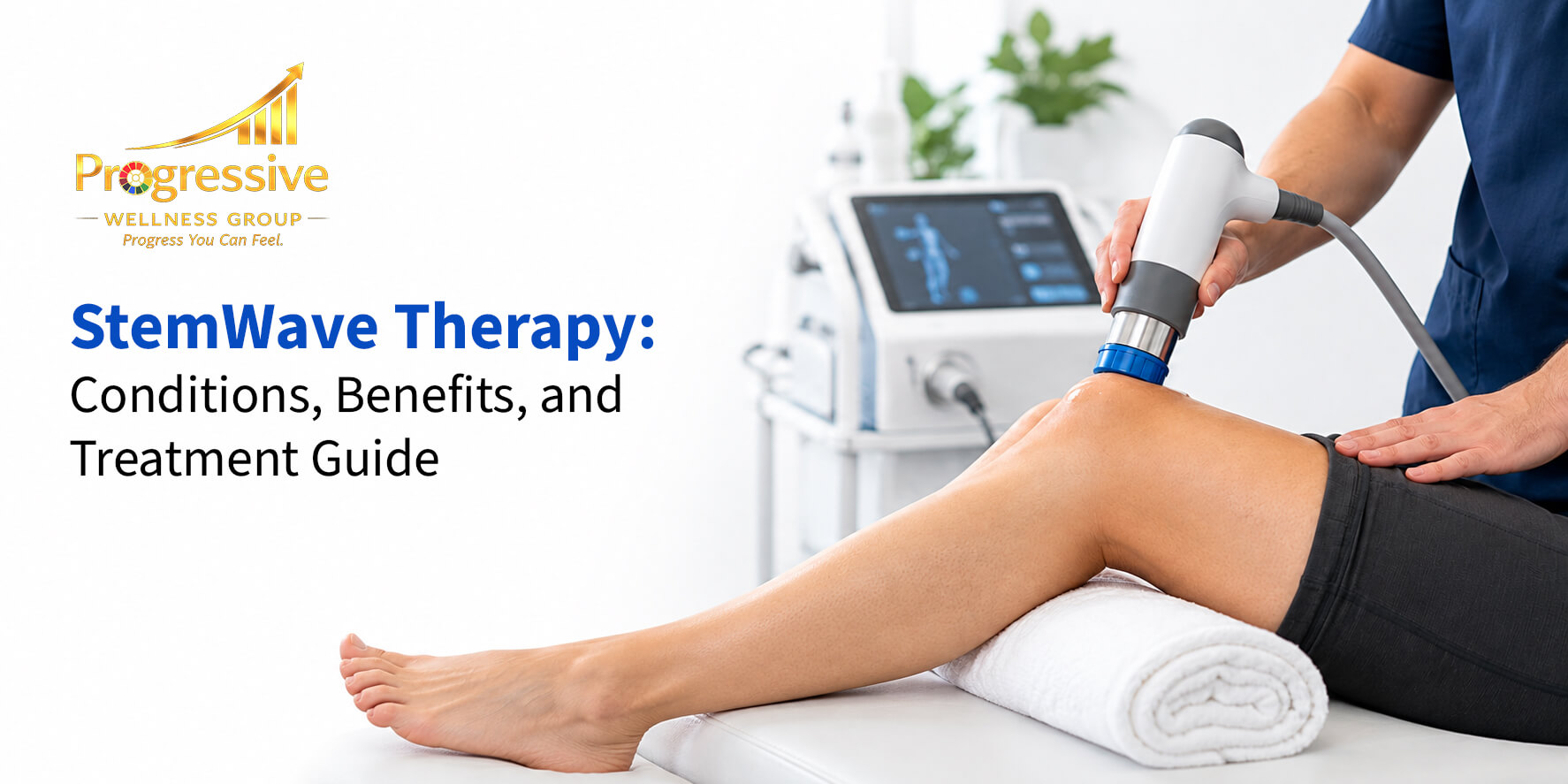
StemWave therapy is a non-invasive approach that uses targeted acoustic wave technology to address pain and dysfunction associated with certain musculoskeletal conditions. Unlike treatments that require an incision or injection, StemWave delivers acoustic energy externally to the targeted area.
More specifically, StemWave uses electrohydraulic acoustic wave therapy, which generates focused, high-energy acoustic waves and directs them toward specific tissues. Key points include:
- Non-Invasive Approach: Treatment is delivered externally without surgical incisions or injections.
- Targeted Acoustic Energy: Acoustic waves are directed toward specific areas identified during the evaluation.
- Complementary Care: StemWave can be incorporated alongside physical therapy, which may include strengthening, mobility exercises, movement training, and hands-on techniques.
- Individualized Treatment: The appropriate approach depends on the source of pain, affected tissues, symptoms, and overall health.
Because pain can have different underlying causes, an individualized evaluation is important before determining whether StemWave is appropriate for a specific condition.
What Types of Conditions Can StemWave Therapy Address?
StemWave therapy may be considered for a range of musculoskeletal conditions affecting the joints, tendons, muscles, ligaments, neck, and back. It may also be explored when pain or soft-tissue dysfunction persists despite conservative care.
However, the underlying cause and severity of symptoms matter, so a clinical evaluation is important before determining whether StemWave is appropriate.
StemWave Therapy for Knee Pain
Knee pain can affect how you walk, exercise, work, and enjoy everyday activities. Depending on the underlying cause, StemWave therapy may be considered as part of a broader and non-invasive approach to managing certain types of knee discomfort.
Knee Arthritis and Degenerative Joint Pain
Arthritis and age-related joint changes may contribute to:
- Knee pain and stiffness
- Difficulty walking or climbing stairs
- Discomfort during exercise
- Reduced activity and mobility
For some patients, StemWave may be explored alongside conservative care to help manage symptoms without immediately turning to surgery.
Meniscus-Related Knee Pain
A meniscus injury can cause more than general knee discomfort. Common symptoms may include:
- Pain with twisting or squatting
- Swelling around the joint
- Catching or clicking sensations
- A feeling of knee instability
Meniscus injuries vary in severity and type. A clinical assessment can help determine whether StemWave is appropriate or if another treatment approach is needed.
How StemWave Can Address Knee Arthritis and Meniscus Pain
Knee arthritis and meniscus problems can affect comfort, movement, and confidence in everyday activities. Depending on the underlying issue, StemWave may be considered as part of a personalized care plan to:
- Support Comfort: Can help manage discomfort associated with certain knee conditions.
- Encourage Mobility: May complement exercises and physical therapy focused on restoring movement.
- Support Recovery: May be incorporated alongside other conservative treatments when clinically appropriate.
A proper evaluation helps determine whether StemWave is suitable based on the type, severity, and cause of the knee problem.
StemWave Therapy for Shoulder Pain
Shoulder pain can quickly interfere with everyday life. Reaching overhead, lifting, sleeping comfortably, or participating in sports can become difficult when pain and stiffness limit normal movement.
Rotator Cuff-Related Pain
Rotator cuff problems may cause:
- Pain when reaching or lifting
- Limited shoulder movement
- Discomfort during exercise or sports
- Increased pain at night
Because rotator cuff conditions can vary significantly, identifying the underlying problem is an important first step. StemWave therapy may be considered for certain patients as part of an individualized care plan.
Chronic Shoulder Stiffness
Stiffness can make even simple shoulder movements feel restricted. Depending on the cause, treatment may combine:
- Mobility exercises
- Stretching
- Strengthening
- Physical therapy
The goal is to gradually restore comfortable movement while addressing factors that may be contributing to reduced shoulder function.
How StemWave Can Address Shoulder Injuries
Shoulder injuries can involve muscles, tendons, and other soft tissues. Depending on the injury, StemWave may be incorporated into a broader recovery plan to:
- Support the body’s natural healing response
- Help manage discomfort
- Encourage improved movement and function
- Complement rehabilitation and physical therapy
A clinical evaluation can help determine whether this approach is appropriate for the specific injury and recovery stage.
StemWave Therapy for Back and Neck Pain
Back and neck pain can interfere with work, sleep, exercise, and everyday movement. For patients considering non-surgical options, StemWave for back pain may be worth discussing when symptoms are linked to appropriate musculoskeletal conditions.
Lower Back Pain
Persistent lower back pain can make sitting, bending, lifting, or getting out of bed uncomfortable. Muscle tension, soft-tissue irritation, and other factors may contribute, but the underlying cause varies between individuals.
For patients exploring StemWave for back pain, Progressive Wellness Group also provides more information about StemWave for lower back pain and its potential role in managing chronic symptoms.
Neck Pain and Stiffness
Neck discomfort may develop from posture, prolonged desk work, muscle tension, previous injuries, or other musculoskeletal factors. It can make turning the head, driving, working, or sleeping more difficult.
Disc-Related Back or Neck Symptoms
Disc-related symptoms can involve localized discomfort, stiffness, or pain that travels into an arm or leg. Because these symptoms may have different underlying causes, an accurate diagnosis is important before choosing a treatment approach.
How StemWave Can Address Back and Neck Pain
Once the source of symptoms has been identified, StemWave may be considered as part of a personalized care plan for certain patients. Depending on the condition, it can:
- Support Comfort: Help manage localized musculoskeletal discomfort.
- Support the Healing Response: Target affected tissues with acoustic wave energy.
- Complement Rehabilitation: Work alongside physical therapy, mobility exercises, and strengthening.
- Support Daily Function: Help patients work toward improved movement and activity tolerance.
StemWave is not intended to correct structural disc problems or replace necessary medical care. A clinical evaluation helps determine whether it’s appropriate for the individual condition.
StemWave Therapy for Hip Pain
Hip pain can stem from several sources, including joint degeneration, soft-tissue irritation, overuse, or muscle imbalance. Identifying the underlying cause is important because the right treatment approach depends on what is contributing to the symptoms.
Hip discomfort can affect much more than exercise. It may make walking, sitting, climbing stairs, or sleeping comfortably more difficult.
Common Causes of Hip Pain
Some patients experience hip pain related to:
- Degenerative Joint Changes: Pain and stiffness that may increase with activity.
- Soft-Tissue Irritation: Discomfort involving muscles, tendons, or surrounding tissues.
- Overuse or Muscle Imbalance: Repetitive activity or reduced strength may contribute to pain and movement limitations.
How StemWave Can Address Hip Pain
After evaluating the source of symptoms, StemWave may be considered as part of a personalized care plan. Depending on the condition, it can:
- Support Comfort: Help manage certain types of musculoskeletal discomfort.
- Target Affected Tissues: Deliver acoustic wave energy to the area being treated.
- Complement Rehabilitation: Work alongside mobility, strengthening, and physical therapy.
- Support Better Function: Help patients work toward improved movement and everyday activity.
The goal isn’t simply to address pain but to develop a treatment plan that considers the underlying cause and the patient’s functional needs.
StemWave Therapy for Ankle and Foot Pain
Ankle and foot pain can make every step uncomfortable because these areas carry your body weight throughout the day. Patients exploring plantar fasciitis non-surgical treatment often want options that allow them to stay active while avoiding unnecessary downtime.
Ankle Injuries
Sprains and strains are common, but symptoms don’t always disappear quickly. Lingering pain, swelling, or weakness may continue to affect:
- Walking and standing
- Exercise and sports
- Balance and stability
- Everyday mobility
Tendon-Related Foot and Ankle Pain
Repetitive stress and overuse can affect tendons in the foot and ankle, including the Achilles tendon. These problems often develop gradually and may benefit from a structured rehabilitation approach.
Plantar fasciitis is another common source of foot pain, making plantar fasciitis non-surgical treatment an important consideration for patients looking for alternatives to invasive procedures.
Persistent Foot Pain
Ongoing foot pain can have many causes, including structural problems, soft-tissue irritation, or nerve-related symptoms. Identifying the underlying cause is essential before selecting treatment.
How StemWave Can Address Foot and Ankle Pain
For appropriate candidates, StemWave may be incorporated into a personalized plan to:
- Support comfort and mobility
- Target affected soft tissues with acoustic wave energy
- Complement stretching and strengthening
- Work alongside rehabilitation and other conservative care
A clinical evaluation helps determine whether this approach is suitable for the specific foot or ankle condition.
StemWave Therapy for Elbow and Wrist Pain
Elbow and wrist pain can make everyday activities from typing and lifting to gripping and playing sports more difficult. Repetitive movements and overuse are common contributors, but the right approach depends on the underlying problem.
Tennis Elbow and Repetitive-Use Pain
Repeated gripping, lifting, or arm movements can place stress on the tissues around the elbow, contributing to conditions such as tennis elbow or golfer’s elbow.
Persistent symptoms may affect:
- Work and household tasks
- Exercise and sports
- Gripping and lifting
- Arm and wrist movement
Wrist and Forearm Overuse Injuries
Frequent typing, lifting, or repetitive gripping can contribute to discomfort and soft-tissue irritation in the wrist and forearm. Because similar symptoms can have different causes, identifying the source is an important first step.
How StemWave Can Address Elbow and Wrist Pain
For appropriate patients, StemWave may be incorporated into a personalized treatment plan to:
- Support Comfort: Help manage certain types of musculoskeletal discomfort.
- Target Affected Tissues: Deliver acoustic wave energy to the treatment area.
- Complement Rehabilitation: Work alongside stretching, strengthening, and physical therapy.
- Support Function: Help patients work toward improved movement and everyday activity.
A clinical evaluation can determine whether StemWave is appropriate for the specific condition.
StemWave Therapy for Tendon and Soft-Tissue Injuries
Tendon and soft-tissue problems can develop from repetitive stress, overuse, or an acute injury. They may involve different tissues and affect both athletic performance and everyday movement.
Common Soft-Tissue Problems
This category can include:
- Tendinopathy: Persistent tendon pain or irritation
- Strains and Sprains: Injuries affecting muscles, tendons, or ligaments
- Overuse Injuries: Problems that develop from repeated usage
- Sports-Related Injuries: Soft-tissue damage associated with athletic activity
- Plantar Fasciitis: A common source of foot pain for which patients may explore plantar fasciitis non-surgical treatment
How StemWave Can Address Soft-Tissue Injuries
For appropriate patients, StemWave may be incorporated into a broader recovery plan to:
- Support the body’s natural healing response
- Help manage certain types of discomfort
- Complement physical therapy and rehabilitation
- Support mobility, strength, and functional recovery
Rehabilitation remains an important part of recovery. Restoring strength, flexibility, and movement patterns can help patients return to their usual activities and reduce the risk of recurring problems.
StemWave Therapy for Chronic Pain
Chronic pain can continue for months or longer, sometimes lasting well beyond the expected healing period of the original injury. Unlike short-term pain, it can affect sleep, movement, work, exercise, and everyday quality of life.
What Can Contribute to Chronic Pain?
Persistent pain may be associated with:
- Previous injuries that haven’t fully recovered
- Joint or soft-tissue problems
- Repetitive stress or overuse
- Changes in movement and muscle function
- Multiple contributing factors occurring together
How StemWave Can Address Chronic Pain
Because chronic pain has different causes, treatment needs to be individualized. For appropriate patients, StemWave may be incorporated into a broader care plan to:
- Target specific areas of musculoskeletal discomfort
- Support the body’s natural healing response
- Complement physical therapy and rehabilitation
- Encourage improved movement and function
For example,
Someone exploring StemWave for back pain may require a different approach than someone experiencing chronic knee or shoulder pain. A clinical evaluation helps identify the underlying factors and determine whether StemWave is appropriate.
StemWave Therapy for Sports Injuries
Sports injuries can interrupt training, competition, and even everyday movement. Athletes often look for non-invasive options that may complement rehabilitation and help them work toward returning to their usual activities.
Common Sports Injuries
Depending on the sport and activity level, athletes may experience:
- Knee Pain: Often associated with repetitive loading, impact, or overuse
- Shoulder Injuries: Common with throwing, swimming, and overhead activities
- Tennis or Golfer’s Elbow: Often linked to repetitive gripping and arm movements
- Ankle Injuries: Including sprains and soft-tissue problems
- Tendon Injuries: Such as Achilles or other activity-related tendon issues
- Muscle Strains: Often resulting from sudden or excessive loading
How StemWave Can Support Sports Injury Recovery
For appropriate athletes, StemWave may be incorporated into a broader recovery plan to:
- Support the body’s natural healing response
- Help manage certain types of discomfort
- Complement physical therapy and sport-specific rehabilitation
- Support mobility, strength, and functional movement
For example,
Athletes exploring plantar fasciitis non-surgical treatment may require a different recovery strategy than those managing elbow or shoulder pain. An individualized assessment helps determine the most appropriate approach.
When StemWave May Be Worth Considering After Other Treatments
Sometimes pain persists despite rest, exercise, physical therapy, medication, or other conservative approaches. When that happens, simply repeating the same treatment may not be the best answer.
A provider may reassess:
- The Original Diagnosis: Could another condition be contributing to the symptoms?
- Previous Treatment: Has the patient had enough time or the right approach for recovery?
- Current Symptoms: Has the location, severity, or pattern of pain changed?
- Additional Options: Could another non-invasive approach be appropriate?
For some patients, StemWave for back pain or another targeted application may be considered as part of a personalized plan.
The decision should always be based on the underlying condition, health history, and clinical evaluation, not simply on whether previous treatments have been unsuccessful.
When StemWave Therapy May Not Be the Right Choice
StemWave therapy is not appropriate for every type of pain or injury. Some symptoms require a different evaluation or immediate medical attention before any non-invasive treatment is considered.
Patients should seek appropriate medical care for symptoms such as:
- Suspected fractures or significant acute injuries
- Severe or unexplained pain
- New or worsening numbness or weakness
- Symptoms that may indicate a neurological problem
- Conditions requiring urgent or specialized treatment
In these situations, identifying the underlying cause takes priority. StemWave shouldn’t replace emergency care, medical evaluation, or treatment recommended for a serious condition.
If your symptoms are severe, unusual, persistent, or getting worse, speak with a qualified healthcare provider first. Once the cause is understood, your provider can determine whether StemWave or another treatment approach is appropriate.
How Do You Know If StemWave Therapy Is Right for Your Condition?
Not every type of pain requires the same treatment. Before recommending StemWave, a provider looks at the cause of your symptoms, your health history, and what you want to achieve from treatment.
Your provider may review:
- Pain Location: Where symptoms occur and whether they spread elsewhere
- Duration: How long the problem has been present
- Diagnosis: What is causing the pain, if already identified
- Previous Care: Treatments or therapies you have already tried
- Daily Function: Activities, movement, or exercise affected by symptoms
- Overall Health: Your medical history and individual treatment goals
For example,
Someone exploring plantar fasciitis non-surgical treatment may have different considerations than a patient with persistent shoulder or hip pain.
Based on your individual needs, StemWave may be considered as a standalone option or combined with physical therapy, rehabilitation, or other conservative care. The goal is to choose an approach that addresses your condition, not simply your symptoms.
What to Expect During a StemWave Treatment Plan
Are you wondering what the process looks like? StemWave care is typically personalized around your condition, symptoms, and recovery goals rather than following a one-size-fits-all schedule.
Start With an Evaluation
Your provider reviews:
- Current symptoms and pain patterns
- Medical and treatment history
- Movement and mobility
- Activities affected by your condition
This helps identify potential contributors to your symptoms and determine whether StemWave is appropriate.
Build a Personalized Plan
Your treatment plan is tailored to your condition and individual needs. The frequency, treatment approach, and overall plan may vary depending on your symptoms and how you respond over time.
Track Your Progress
Progress is evaluated throughout the plan rather than assumed. Your provider may monitor:
Pain → Mobility → Strength → Daily Function
Based on your progress, the treatment plan can be adjusted to better support your recovery goals.
StemWave Therapy vs. Other Treatment Options
When pain continues despite conservative care, several treatment options may be considered. Each approach has a different role, level of invasiveness, and treatment focus.
| Treatment Options | How It Works | Main Focus | Invasiveness | May Be Used With |
| StemWave Therapy | Uses targeted acoustic wave energy externally | Targeted tissue and symptom management | Non-invasive | Physical therapy, exercise, and rehabilitation |
| Physical Therapy | Uses exercises, movement training, and hands-on techniques | Strength, mobility, and function | Non-invasive | StemWave and other conservative treatments |
| Injections | Delivers medication into or around the affected area | Managing inflammation or pain, depending on medication | Minimally invasive | Rehabilitation and other treatments |
| Surgery | Repairs or addresses significant structural problems through a procedure | Correcting conditions that may require surgical intervention | Invasive | Postoperative rehabilitation |
There is no single treatment that works best for every condition. Your provider can consider your diagnosis, symptoms, treatment history, and goals to determine whether StemWave, physical therapy, injections, surgery, or a combination of approaches is most appropriate.
Why Combine StemWave Therapy With Physical Therapy?
StemWave and physical therapy can play different but complementary roles in recovery. One focuses on targeted treatment, while the other works on restoring the movement and function needed for everyday life.
| StemWave Therapy | Physical Therapy |
| Targets affected areas with acoustic wave energy | Builds strength and mobility |
| Can help manage certain types of discomfort | Improves movement and functional capacity |
| Provides a non-invasive treatment approach | Uses exercise, mobility work, and hands-on techniques |
| Can complement rehabilitation | Helps support long-term movement goals |
Combining these approaches may allow treatment to address both symptoms and the movement limitations that can affect recovery. This fits Progressive Wellness Group’s broader approach to regenerative physical therapy, combining advanced therapies with customized physical care based on each patient’s condition and goals.
When Should You Consider an Evaluation for StemWave Therapy?
An evaluation may be worth considering if pain or limited mobility is affecting your routine.
- Persistent pain affecting daily activities
- Exercise limitations that interfere with workouts or sports
- Recurring joint or soft-tissue problems
- Symptoms that have not improved with conservative care
- Reduced mobility following an injury
- Interest in non-invasive options, such as StemWave for back pain
If any of these situations sound familiar, an evaluation can help identify what is contributing to your symptoms and whether StemWave therapy is appropriate. Depending on your needs, it may be used independently or alongside physical therapy and other recommended care.
Explore Personalized StemWave Care at Progressive Wellness Group
Persistent pain doesn’t always have a one-size-fits-all solution. StemWave may be an option for certain musculoskeletal conditions, but the right approach depends on what is causing your symptoms, your treatment history, and your recovery goals.
At Progressive Wellness Group, care begins with understanding your condition and creating a plan around your individual needs. StemWave can be incorporated into a broader approach that may include physical therapy, rehabilitation, and other conservative strategies.
If pain is affecting your movement, exercise, work, or daily activities, a personalized evaluation can help you understand your options and determine whether StemWave is appropriate for you. Get in touch with our experts to schedule an evaluation and take the next step toward a personalized treatment plan.
Frequently Asked Questions (FAQs)
How long does a StemWave treatment session take?
A StemWave session is typically brief, allowing many patients to fit treatment into their regular schedule. Your provider can explain the expected session length based on the area being treated and your individualized treatment plan.
Is StemWave therapy painful?
StemWave treatment is generally designed to be non-invasive, although you may notice sensations as acoustic waves are delivered to the targeted area. Your provider can adjust the treatment approach based on your comfort and the condition being treated.
How many StemWave sessions will I need?
The number of sessions varies based on your condition, symptom duration, treatment goals, and response to care. Rather than using a fixed schedule for everyone, your provider can recommend a personalized treatment plan after an evaluation.
Can I return to normal activities after StemWave treatment?
Yes. Since StemWave is non-invasive, many patients can continue their normal activities with appropriate guidance. Your provider may recommend temporary activity modifications depending on your condition and whether other rehabilitation treatments are part of your care plan.
How do I get started with StemWave therapy?
The first step is a personalized evaluation at Progressive Wellness Group. Your provider can review your symptoms, health history, and treatment goals to determine whether StemWave is appropriate and explain what your care plan may involve.
Does StemWave help plantar fasciitis?
StemWave may help manage plantar fasciitis by using targeted acoustic waves to support circulation, reduce pain and inflammation, and promote tissue healing. Treatment is non-invasive and may be combined with physical therapy to address underlying mobility and strength issues.
Can StemWave help a torn rotator cuff?
StemWave may support recovery from certain rotator cuff injuries by promoting circulation, reducing pain and inflammation, and supporting soft-tissue healing. However, a torn rotator cuff requires professional evaluation to determine whether StemWave, physical therapy, or other treatment is appropriate.